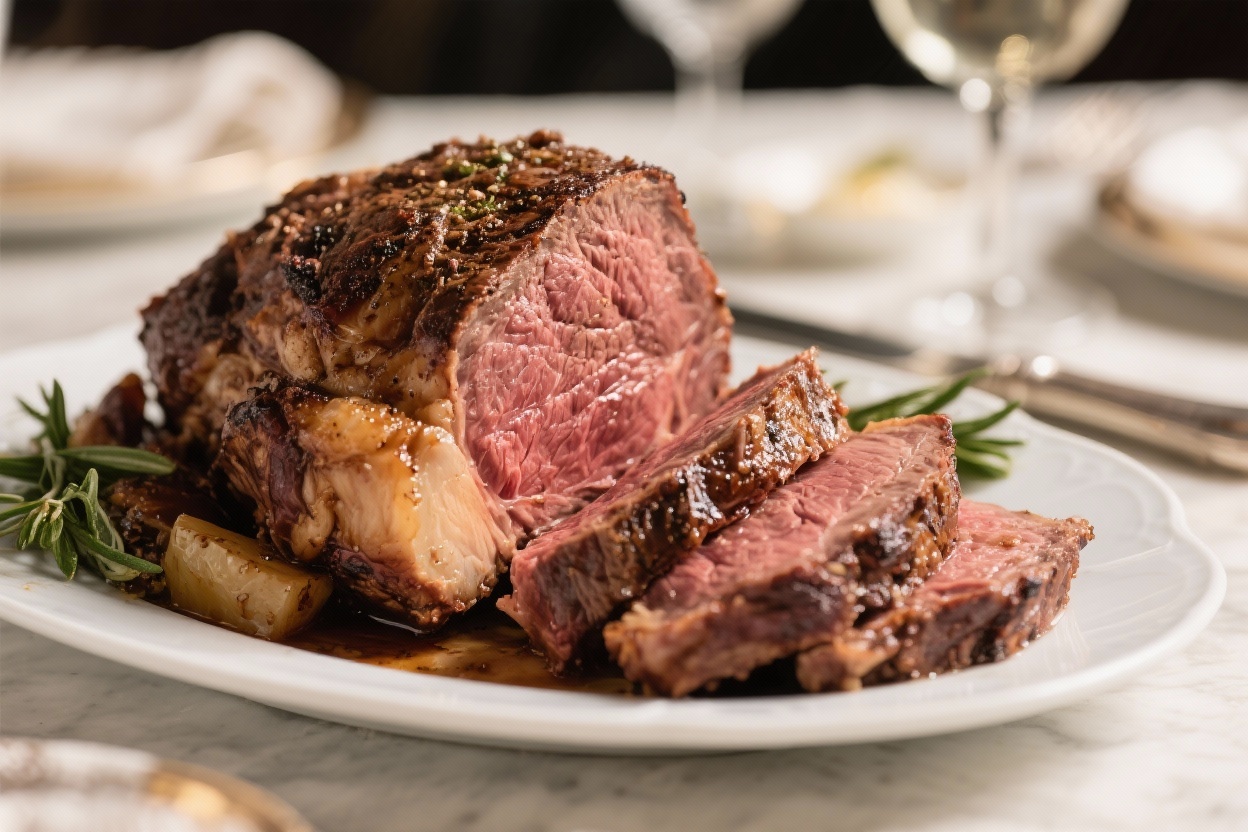
Prime rib is one of those show-stopping roasts that feels special the moment it hits the table. It’s rich, tender, and full of beefy flavor, with a golden crust that crackles when you slice into it. The best part?
You don’t need fancy techniques or restaurant tools to get it right. With a few smart tips and a reliable method, you can make a juicy prime rib that wows guests every time. This recipe keeps it simple, delivers big flavor, and helps you cook with confidence.
What Makes This Recipe So Good
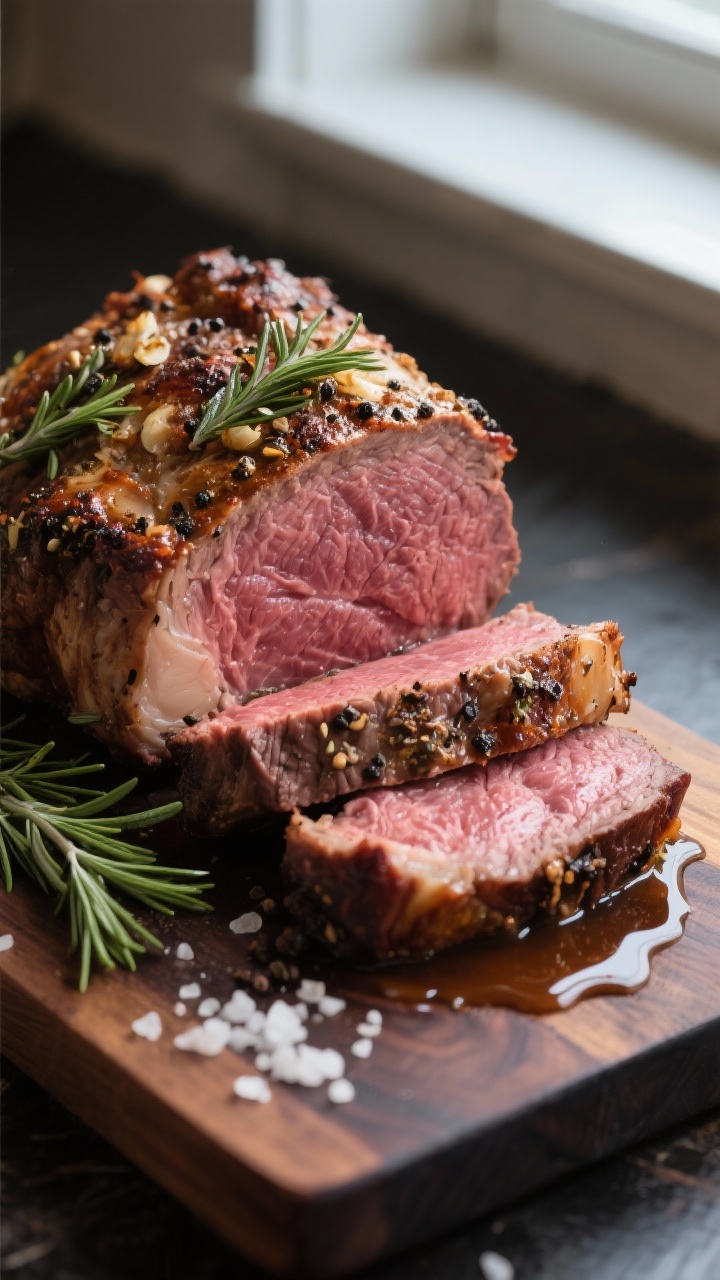
- Simple seasoning, big flavor: Salt, pepper, garlic, and herbs let the beef shine while building an irresistible crust.
- Dry brine for juiciness: A short rest in the fridge with salt helps the roast hold onto moisture and season all the way through.
- Reverse-sear style: Slow roasting for tenderness, then a high-heat blast for that crisp, browned exterior.
- Foolproof doneness: A meat thermometer takes out the guesswork so you hit your ideal temperature.
- Easy pan jus: Deglaze the roasting pan for a quick, savory sauce that pairs perfectly with every slice.
What You’ll Need
- 1 bone-in prime rib roast (standing rib roast), 5–7 pounds (or boneless if you prefer)
- Kosher salt (about 2 teaspoons per pound of meat)
- Freshly ground black pepper (1–2 tablespoons)
- 4–6 cloves garlic, minced
- 2 tablespoons fresh rosemary, finely chopped
- 2 tablespoons fresh thyme, finely chopped
- 2–3 tablespoons olive oil or softened unsalted butter
- 1 cup low-sodium beef broth (for the pan jus)
- 1/2 cup dry red wine (optional, for deglazing)
- 1 teaspoon Dijon mustard (optional, for the jus)
- Kitchen tools: roasting rack and pan, instant-read thermometer, carving knife, foil
Step by Step Instructions
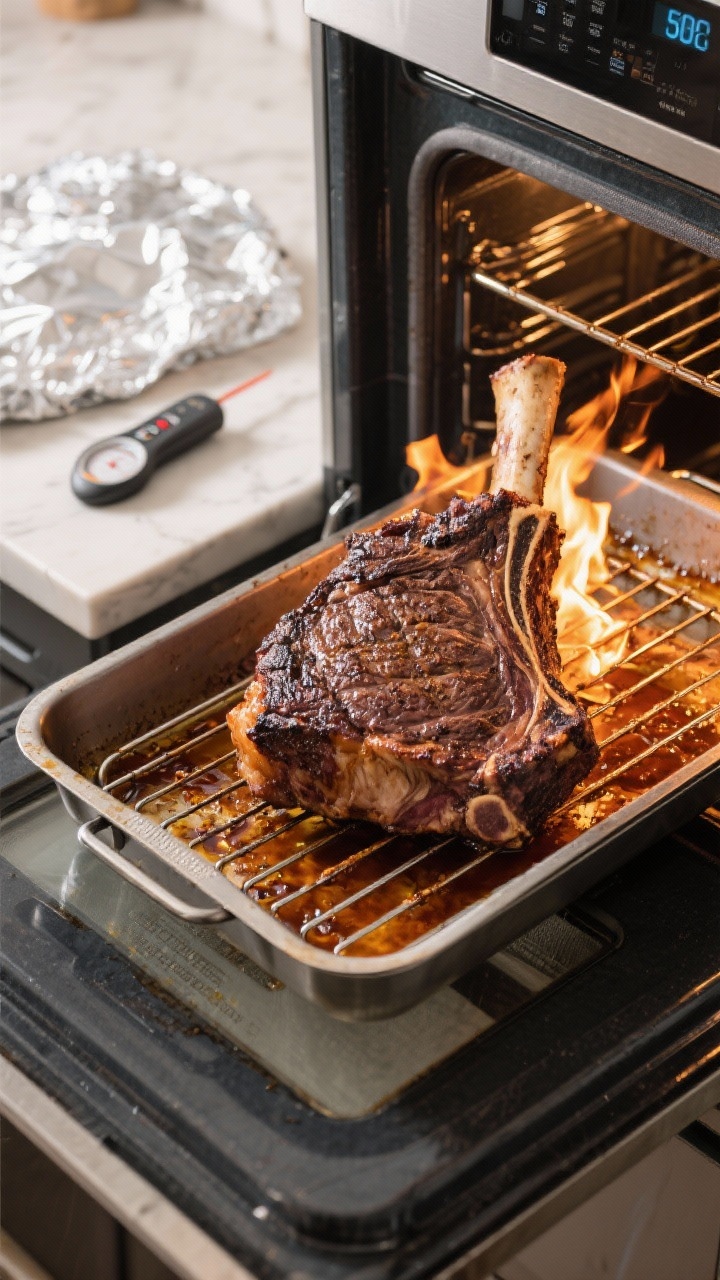
- Prep the roast (1–2 days ahead, optional but best): Pat the roast dry.Season all over with kosher salt (about 2 teaspoons per pound). Place uncovered on a rack in the fridge for 12–48 hours. This dry brine helps the meat stay juicy and flavorful.
- Bring to room temp: Take the roast out of the fridge 1–2 hours before cooking.Pat dry again. This helps it cook more evenly.
- Mix the rub: Combine black pepper, garlic, rosemary, thyme, and olive oil or softened butter. Rub it all over the roast, pressing it into the surface.For bone-in, place the roast bone-side down on the rack.
- Low, slow roast: Preheat oven to 250°F (120°C). Roast until the internal temperature reaches 118–120°F for medium-rare, about 20–30 minutes per pound. Start checking early.Use an instant-read thermometer inserted into the thickest part, avoiding bone.
- Rest the roast: Remove from the oven and tent loosely with foil for 30–45 minutes. The temperature will rise 5–10 degrees as it rests. This step locks in the juices and relaxes the fibers.
- Crank the heat for the crust: Increase oven to 500°F (260°C).Return the roast to the oven for 6–10 minutes, just until the exterior browns and crisps. Watch closely to avoid burning.
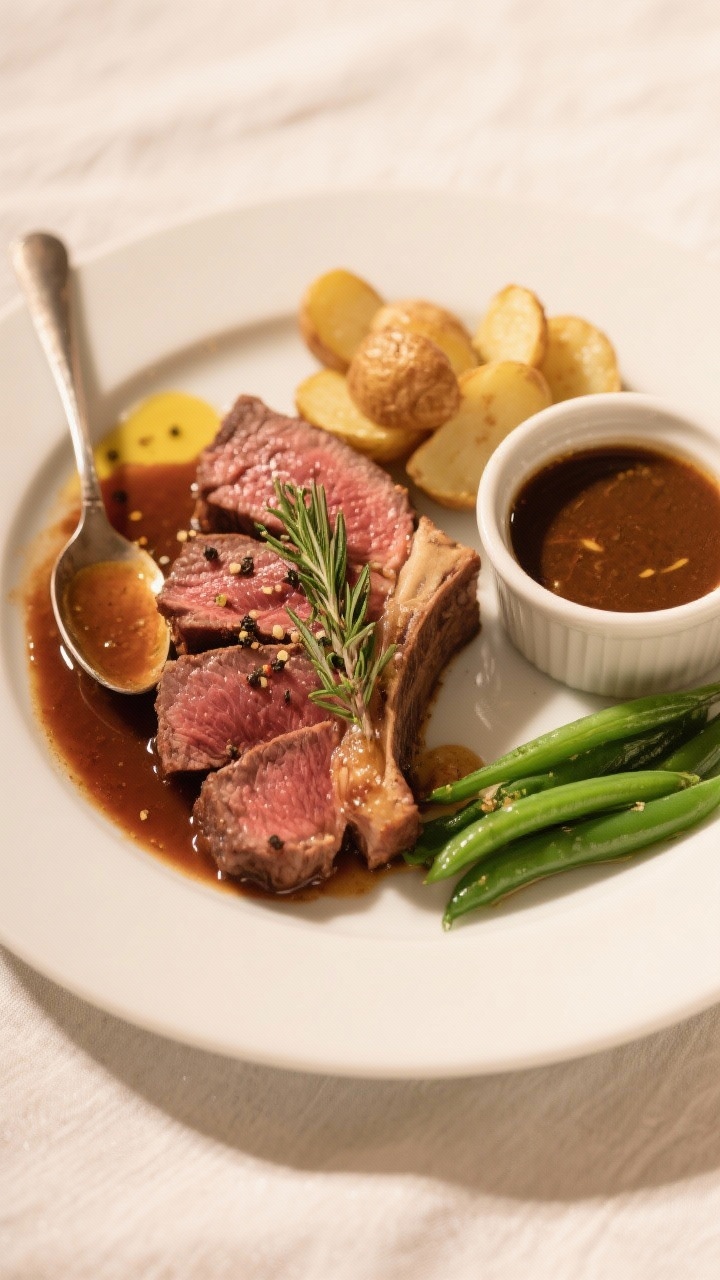
- Make a quick pan jus: While the roast rests, set the roasting pan on the stove over medium heat. Spoon off excess fat, leaving about 2 tablespoons.Add red wine (if using) and scrape up the browned bits. Add beef broth and simmer to reduce slightly. Whisk in a small dab of Dijon if you like.
Season to taste.
- Carve and serve: If bone-in, cut along the bones to remove the roast from the rack of bones, then slice across the grain into 1/2–3/4-inch slices. Serve with warm jus.
Keeping It Fresh
- Refrigeration: Store leftovers in an airtight container for up to 4 days. Slice only what you need to keep the rest juicy.
- Reheating: Warm slices gently in a 250°F oven, covered with foil, until just heated through, or briefly in a covered skillet with a splash of broth.Avoid microwaving on high heat, which can make it tough.
- Freezing: Wrap tightly and freeze for up to 2 months. Thaw overnight in the fridge and reheat low and slow.
- Make-ahead jus: The pan jus can be cooled, chilled, and reheated. Skim any hardened fat before warming.
Why This is Good for You
- High-quality protein: Prime rib offers complete protein to support muscle and satiety.
- Iron and B vitamins: Beef is rich in iron, B12, niacin, and zinc, which support energy and immune health.
- Balanced approach: Pairing this roast with vegetables and a simple salad makes a satisfying, nutrient-conscious meal.
- Mindful portions: A 6–8 ounce serving delivers flavor and satisfaction without going overboard.
Common Mistakes to Avoid
- Skipping the thermometer: Guessing leads to overcooked meat.A thermometer is your best friend here.
- Not resting the roast: Cutting too soon lets the juices run out. Resting keeps the meat tender and moist.
- Roasting too hot from the start: High heat early can overcook the exterior before the inside reaches temp. The low-and-slow method prevents that.
- Under-seasoning: Prime rib is thick; salt generously so the seasoning penetrates.
- Forgetting to dry the surface: Moisture prevents browning.Pat the roast dry before seasoning and searing.
Variations You Can Try
- Horseradish crust: Mix prepared horseradish with butter, breadcrumbs, and herbs; spread on top for the final high-heat blast.
- Garlic-parmesan rub: Add grated Parmesan to the herb butter for a savory, umami-rich crust.
- Smoky spice blend: Swap herbs for smoked paprika, cumin, and a pinch of cayenne for a bolder flavor.
- Boneless roast: Cooks slightly faster and is easier to carve. Tie with butcher’s twine to keep the shape.
- Herb butter baste: During the last 30 minutes of the low roast, baste with melted herb butter for extra richness.
FAQ
How much prime rib should I buy per person?
For bone-in, plan on about 1 pound per person (bones add weight). For boneless, 3/4 pound per person is usually enough, especially with sides.
What internal temperature should I aim for?
For medium-rare, pull the roast at 118–120°F and let it rest to 125–130°F.
For medium, pull at 128–130°F and rest to 135–140°F. Always measure in the thickest part.
Do I need to tie the roast?
Bone-in roasts usually don’t need tying. Boneless roasts benefit from being tied every 1.5–2 inches to keep an even shape for uniform cooking.
Can I cook it the day before?
You can slow-roast it to about 5–10 degrees below your target temp, cool, and refrigerate.
Reheat gently covered at 250°F, then finish with the high-heat blast for the crust. Freshly cooked is best, but this method works well for planning.
What if I don’t have fresh herbs?
Use dried herbs, but reduce the amount: about 2 teaspoons dried rosemary and 2 teaspoons dried thyme. Crush them between your fingers to release more aroma.
Is the reverse-sear necessary?
It’s not mandatory, but it delivers a tender interior and a great crust with less risk of overcooking.
If you prefer, you can start hot (450°F for 20 minutes) and finish low, but watch the internal temp closely.
Wrapping Up
A prime rib roast doesn’t have to be complicated to be amazing. With a solid salt rub, gentle roasting, and a quick sear at the end, you’ll get tender slices with a beautiful crust every time. Add a simple pan jus and your favorite sides, and you’ve got a centerpiece worthy of any special dinner.
Keep the thermometer handy, let it rest, and enjoy the compliments.