

There’s something about Chilean sea bass that instantly feels special, even if you’re cooking on a Tuesday. This recipe takes a cue from Ina Garten’s style: fresh ingredients, bold flavors, and minimal fuss. You’ll get buttery, flaky fish with a bright lemon-herb finish and a silky pan sauce that feels restaurant-worthy.
No complicated techniques. Just a few good steps, done well.
What Makes This Special
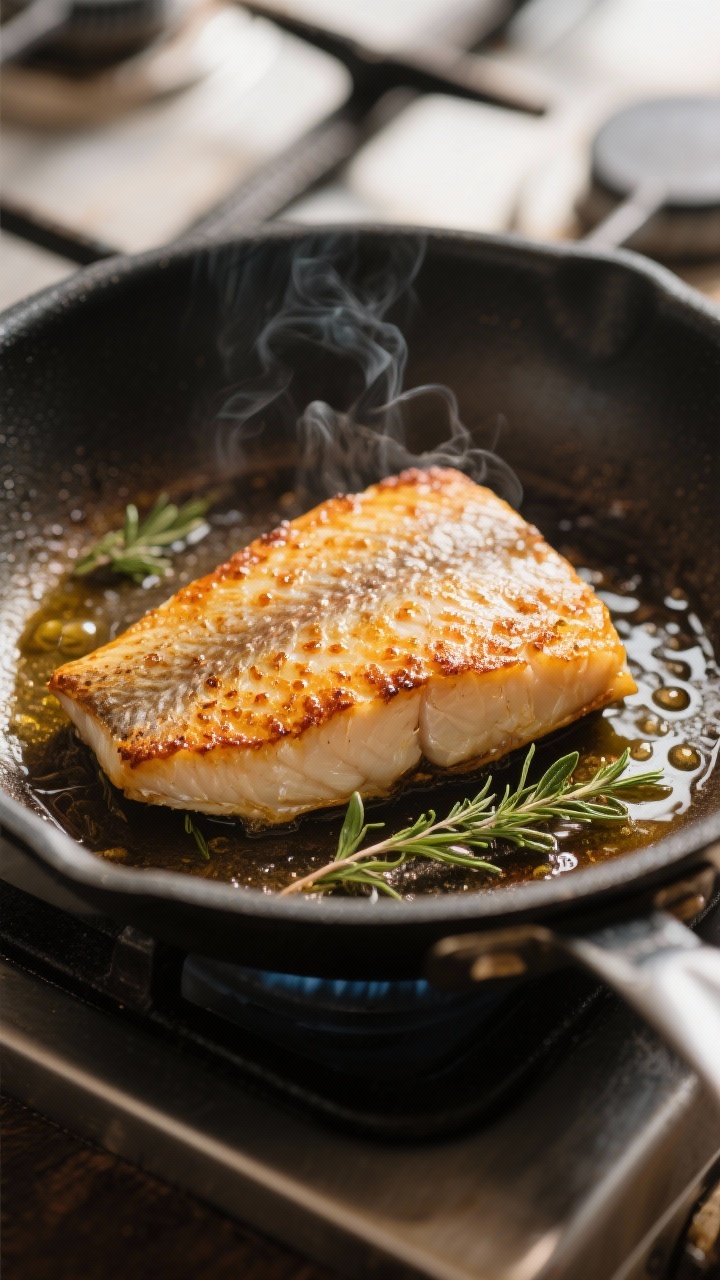
This recipe brings together buttery Chilean sea bass with a lemon, garlic, and white wine pan sauce that tastes luxurious but is easy to pull off. The fish is seared for a gorgeous crust, then finished in the oven so it stays moist and tender.
Fresh herbs and a pat of butter give it that polished, Ina-style finish. It’s the kind of dish that impresses guests yet works just as well for a laid back night at home.
What You’ll Need
- Chilean sea bass fillets (2 fillets, 6–8 ounces each, skin on if possible)
- Kosher salt and freshly ground black pepper
- Olive oil (2 tablespoons)
- Unsalted butter (3 tablespoons, divided)
- Garlic (2 cloves, minced)
- Dry white wine (1/2 cup; Sauvignon Blanc or Pinot Grigio works well)
- Chicken or seafood stock (1/2 cup)
- Lemon (zest of 1 lemon and 2 tablespoons juice)
- Fresh thyme (1 teaspoon leaves, plus extra for garnish)
- Fresh parsley (2 tablespoons, chopped)
- Capers (1 tablespoon, drained; optional but lovely)
- Lemon wedges (for serving)
Step by Step Instructions
- Preheat the oven. Set your oven to 400°F (200°C). Pat the fish dry with paper towels.Dry fish sears better and gives you that golden crust.
- Season generously. Sprinkle both sides of the sea bass with kosher salt and pepper. Don’t be shy—thick fillets need a firm hand with seasoning.
- Heat the pan. Place a large oven-safe skillet over medium-high heat. Add the olive oil and 1 tablespoon butter.When the butter foams and just starts to brown, you’re ready to sear.
- Sear the fish. Add the sea bass, skin side down if your fillets have skin. Press lightly with a spatula for the first 20 seconds so the skin doesn’t curl. Sear for 3–4 minutes until the bottom is deeply golden.
- Flip and finish in the oven. Carefully flip the fillets.Transfer the skillet to the oven and roast for 6–8 minutes, depending on thickness, until the fish is just opaque and flakes easily with a fork.
- Rest the fish. Transfer the fillets to a warm plate and tent loosely with foil. Resting helps the juices settle.
- Build the sauce. Return the skillet to medium heat on the stove. Add the minced garlic and sauté for 30 seconds.Pour in the white wine, scraping up any browned bits. Let it reduce by about half, 2–3 minutes.
- Add stock and finish. Stir in the stock, lemon zest, lemon juice, thyme, and capers (if using). Simmer 2–3 minutes until slightly thickened.
- Whisk in butter. Remove the pan from heat and whisk in the remaining 2 tablespoons butter until the sauce turns glossy.Taste and adjust seasoning with salt and pepper.
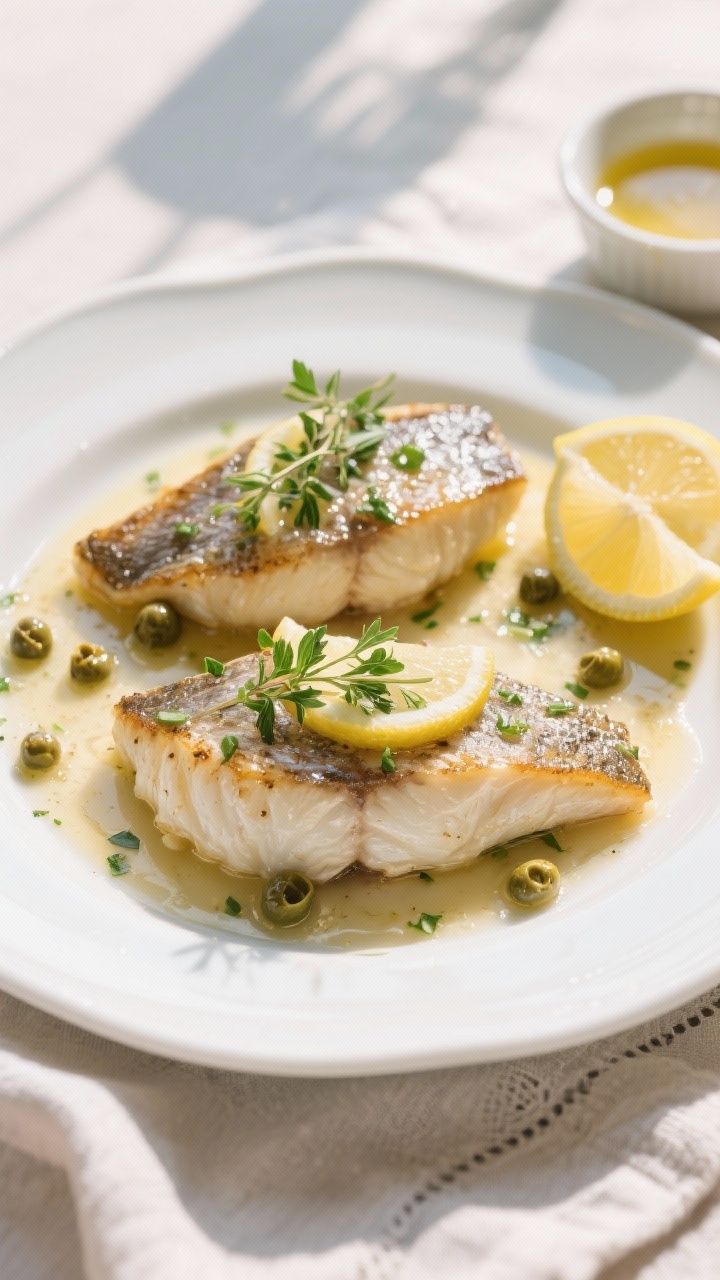
- Plate and garnish. Spoon the sauce over the fish. Shower with chopped parsley and a few thyme leaves. Serve with lemon wedges.
Storage Instructions
- Refrigerate: Store leftover fish and sauce in an airtight container for up to 2 days.Keep them together so the fish stays moist.
- Reheat gently: Warm in a covered skillet over low heat with a splash of stock or water, 3–5 minutes. Avoid the microwave if you can; it dries the fish.
- Freezing: Not recommended. The delicate texture of sea bass suffers after freezing and thawing.
Health Benefits
- Lean protein: Chilean sea bass provides high-quality protein that supports muscle and tissue repair.
- Omega-3 fats: It offers heart-healthy fats that support brain function and reduce inflammation.
- Balanced flavors, lighter sauce: The pan sauce relies on wine, stock, and lemon rather than heavy cream, keeping the dish elegant but not heavy.
- Fresh herbs: Thyme and parsley add antioxidants and brightness without extra calories.
Pitfalls to Watch Out For
- Wet fish won’t brown: If the fillets aren’t dry, you’ll steam instead of sear.Pat them well before seasoning.
- Poor pan heat: If the pan isn’t hot, you won’t get a crust. Wait for the butter to foam and lightly brown.
- Overcooking: Sea bass is forgiving, but it can still dry out. Pull it when it’s just opaque and flakes easily.
- Breaking the sauce: Add the final butter off the heat and whisk.Boiling can split the sauce.
- Too much lemon too soon: If you add lemon before the reduction, it can turn bitter. Reduce wine first, then add lemon and finish with butter.
Recipe Variations
- Lemon-herb panko crust: Mix panko with lemon zest, parsley, olive oil, and a pinch of salt. Press on top of the fillets after searing, then finish in the oven for a crunchy topping.
- Tomato-caper burst: Add halved cherry tomatoes to the sauce right after the garlic.Cook until they start to soften, then proceed with wine and stock.
- Brown butter sage: Swap thyme for sage and let the butter go nutty before adding wine. Deep, cozy flavor with the same technique.
- Olive and herb relish: Top the finished fish with a quick mix of chopped Castelvetrano olives, parsley, lemon zest, and a drizzle of olive oil.
- Creamy finish: For a richer sauce, whisk in 2 tablespoons heavy cream with the stock before adding lemon and butter.
- Alternative fish: If you can’t find Chilean sea bass, use black cod (sablefish), halibut, or thick-cut cod loins.
FAQ
Can I make this without wine?
Yes. Replace the wine with extra stock and add 1–2 teaspoons of white wine vinegar or a bit more lemon juice to bring back the acidity.
How do I know when the fish is done?
The fish should flake easily with a fork and look just opaque in the center.
A thermometer should read around 130–135°F for moist, tender fillets.
Do I need the skin on?
Skin-on helps with searing and keeps the fish intact, but skinless works too. If using skin-on, serve skin-side up to keep it crispy.
What should I serve with it?
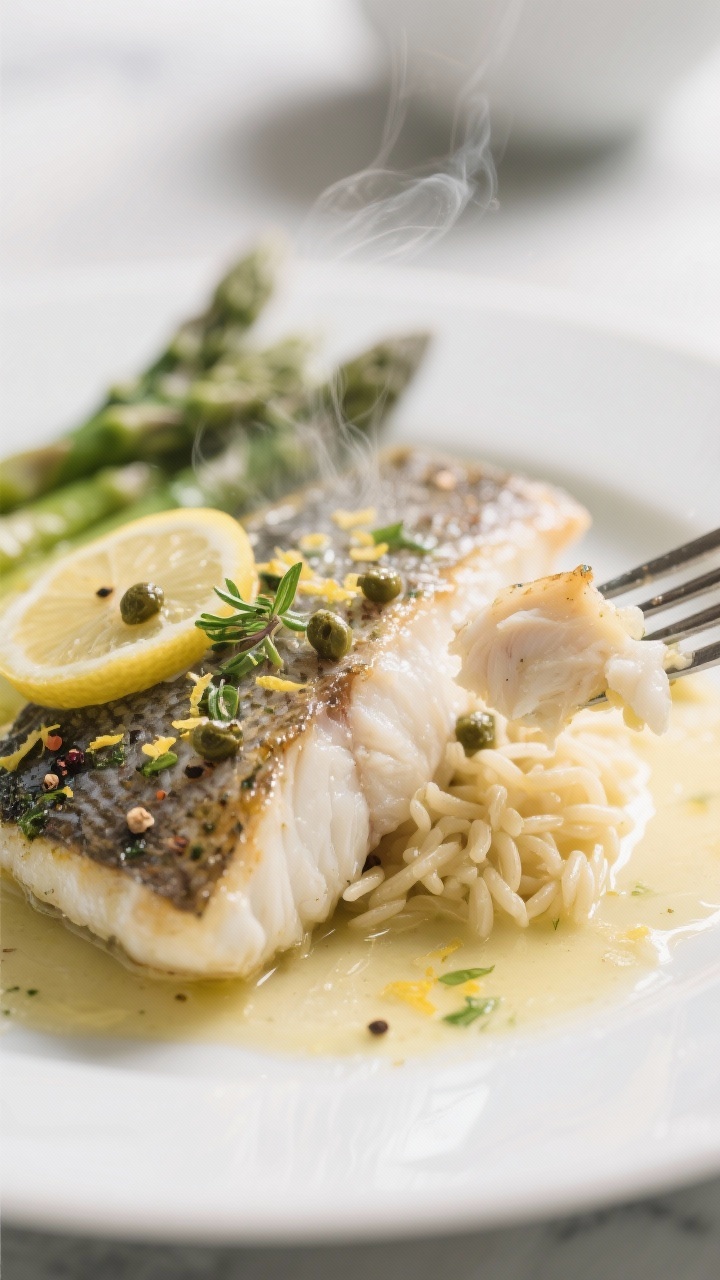
Try roasted asparagus, sautéed green beans, or a simple arugula salad. For carbs, lemony couscous, creamy mashed potatoes, or buttered orzo pair beautifully.
Is Chilean sea bass sustainable?
Sourcing matters.
Look for options certified by reputable sustainability programs or ask your fishmonger for responsibly sourced Patagonian toothfish (the actual name for Chilean sea bass).
Can I make the sauce ahead?
You can reduce the wine and stock earlier in the day. Reheat gently, then add lemon and butter right before serving for the best texture and gloss.
My sauce is too thin. What now?
Let it simmer 1–2 more minutes to reduce, or whisk in a small cold butter cube to slightly thicken and emulsify.
What pan works best?
A heavy stainless steel or cast-iron skillet gives the best sear.
Make sure it’s oven-safe for an easy transfer to the oven.
Wrapping Up
This Ina-inspired Chilean sea bass hits that sweet spot: simple steps, clean flavors, and a touch of luxury. The lemon-herb pan sauce makes it feel like a special occasion, even if it’s just dinner at home. Keep your pan hot, your fish dry, and your butter ready—and you’ll have a beautiful plate in minutes.
Pair it with something green and a glass of the same white wine you cooked with, and enjoy every bite.
Printable Recipe Card
Want just the essential recipe details without scrolling through the article? Get our printable recipe card with just the ingredients and instructions.