
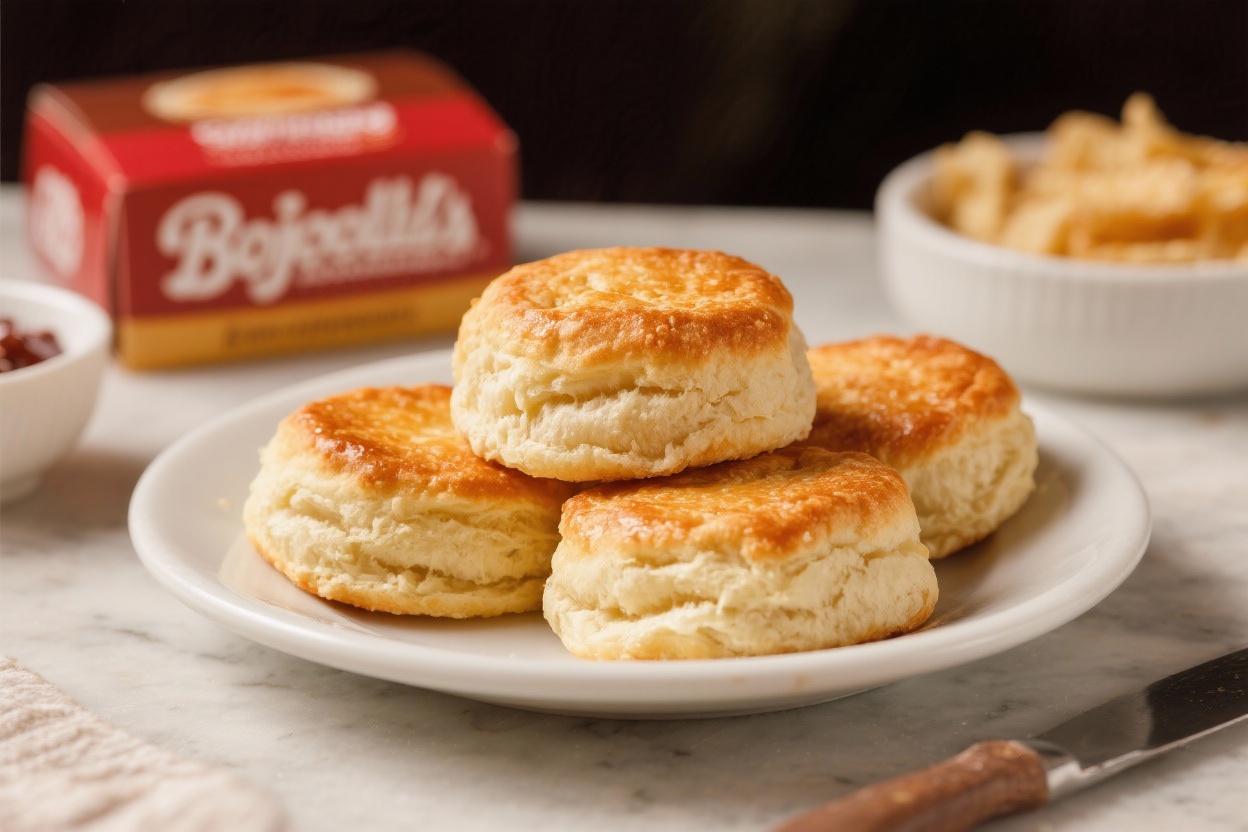
Bojangles biscuits have a reputation: tall, fluffy layers with a crisp, golden top and a tender center. If you’ve ever wished you could recreate that magic at home, this recipe gets you close without special tools or complicated steps. It’s simple, reliable, and uses pantry staples.
The key is cold ingredients, light handling, and a few clever tricks to build those layers. Make them for breakfast sandwiches, serve with gravy, or enjoy warm with honey and butter.
What Makes This Special
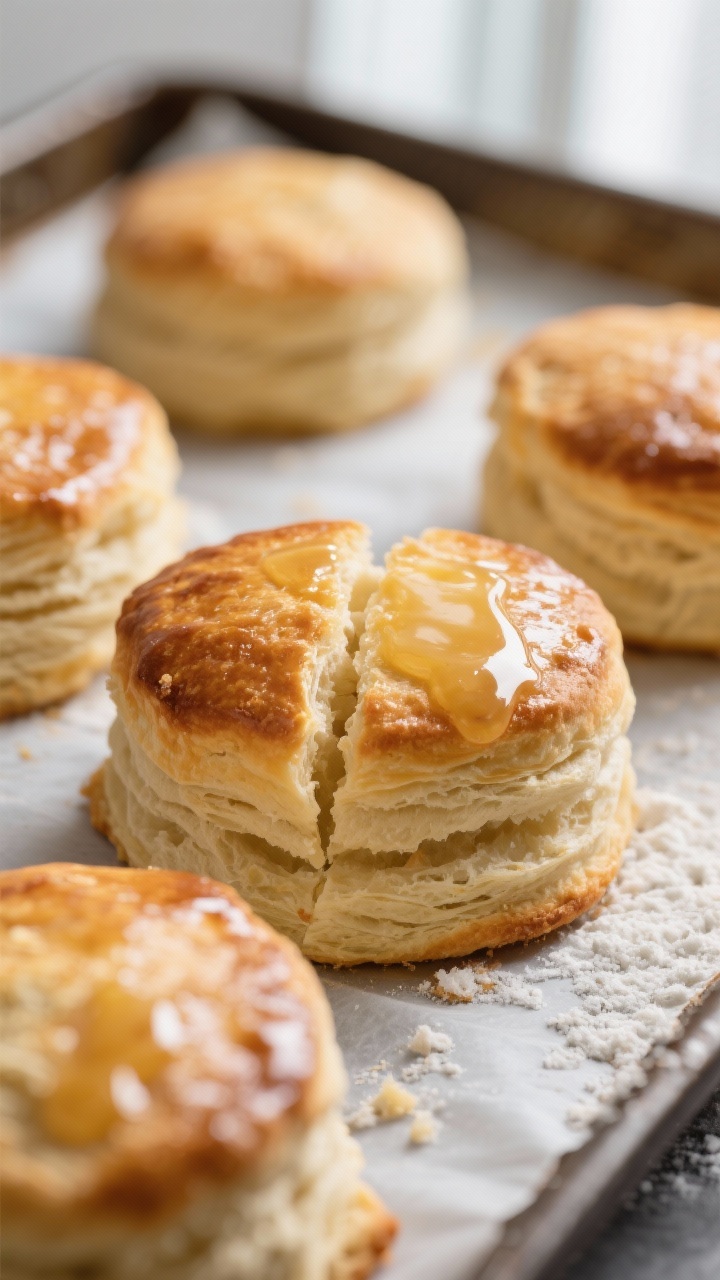
These biscuits aim for that signature fast-casual style tall, layered, and buttery, with a slightly salty edge. The method focuses on cold fat and high heat to create lift and flake.
A quick “laminating” fold mimics pastry without the fuss. The end result is a biscuit that stands up to eggs, fried chicken, or a smear of jam without crumbling apart.
What You’ll Need
- 2 1/2 cups self-rising flour (plus extra for dusting)
- 1 tablespoon granulated sugar (optional, for balanced flavor)
- 1/2 teaspoon baking powder (boosts lift even with self-rising flour)
- 1/2 teaspoon baking soda (helps tenderness and browning)
- 1 teaspoon kosher salt (reduce to 3/4 tsp if using salted butter)
- 6 tablespoons cold unsalted butter (cut into small cubes)
- 2 tablespoons cold shortening (traditional for flakiness; sub butter if needed)
- 1 to 1 1/4 cups cold buttermilk (start with 1 cup)
- 2 tablespoons melted butter (for brushing on top)
Tools: Mixing bowl, pastry cutter or two forks, measuring cups/spoons, bench scraper (nice to have), rolling pin (optional), 2 1/4–2 1/2 inch biscuit cutter, baking sheet, parchment paper.
Step by Step Instructions
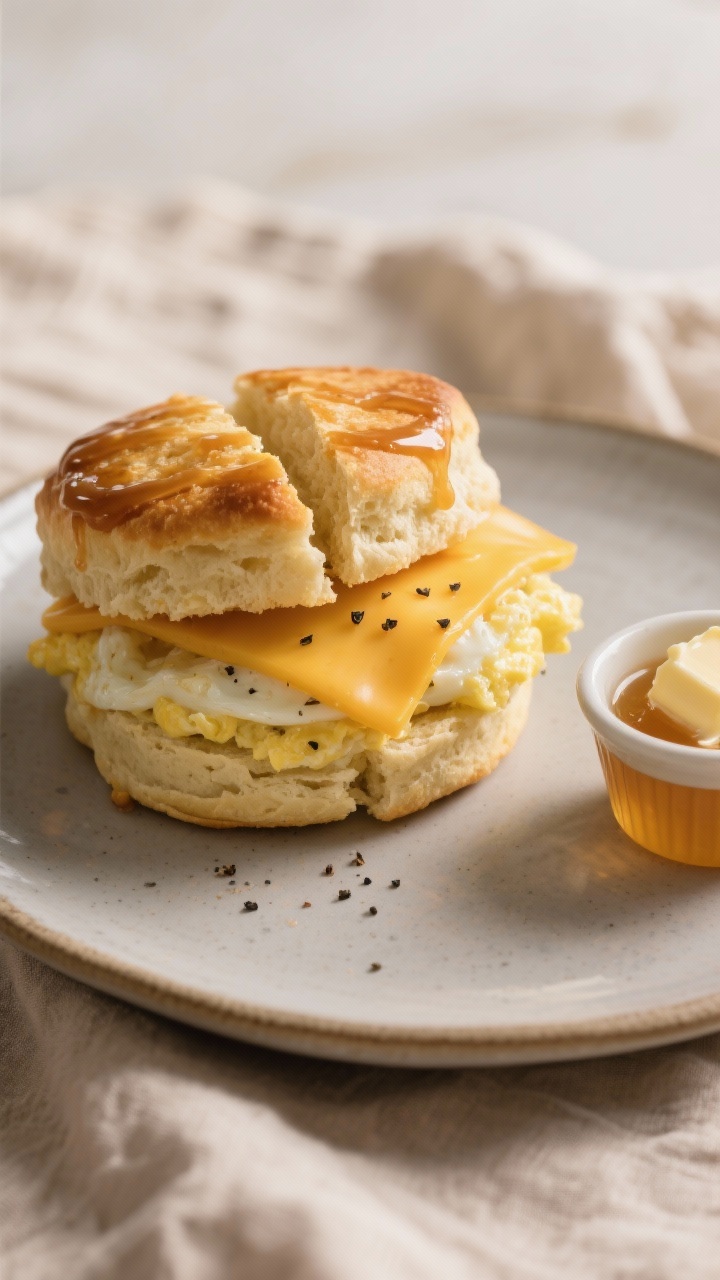
- Chill everything. Pop the butter, shortening, and even the flour in the freezer for 10 minutes. Cold ingredients create steam and layers.
- Preheat the oven. Heat to 450°F (232°C).Line a baking sheet with parchment.
- Mix dry ingredients. In a large bowl, combine self-rising flour, sugar, baking powder, baking soda, and salt.
- Cut in the fats. Add the cold butter and shortening. Use a pastry cutter or two forks to work them into pea-sized bits. You should see visible small chunks.
- Add buttermilk. Pour in 1 cup cold buttermilk.Stir gently with a fork just until a shaggy dough forms. If dry flour remains, add up to 1/4 cup more, a tablespoon at a time. The dough should be slightly sticky but not wet.
- Turn out and flour lightly. Dust your counter with flour.Turn the dough out and sprinkle the top lightly with flour.
- Pat and fold for layers. Pat the dough into a rectangle about 3/4 inch thick. Fold it in thirds like a letter. Turn 90 degrees, pat gently again, and repeat the fold one more time.This quick lamination builds flake.
- Final pat. Pat the dough to about 1 inch thick for tall biscuits. Avoid using a rolling pin; your hands keep the dough tender.
- Cut biscuits. Dip your cutter in flour and press straight down—no twisting. Twisting seals edges and limits rise.Gather scraps, gently stack them, and pat back to 1 inch for a second cut.
- Arrange snugly. Place biscuits so they just touch on the baking sheet. Touching sides help them rise higher.
- Bake. Bake 12–15 minutes, until the tops are golden brown and tall.
- Finish with butter. Brush hot biscuits with melted butter. Let them sit 5 minutes before serving so the crumb sets.
Keeping It Fresh
These are best the day they’re baked, but they store well.
Keep cooled biscuits in an airtight container at room temperature for up to 2 days. For longer storage, freeze in a zip-top bag for up to 2 months.
To reheat: Wrap in foil and bake at 350°F (177°C) for 8–10 minutes (room temp) or 15–18 minutes (frozen). For a crisp top, open the foil for the last 2 minutes.
Make-ahead tip: Cut the unbaked biscuits, freeze on a sheet until solid, then bag.
Bake from frozen at 450°F, adding 2–3 extra minutes.
Why This is Good for You
Biscuits aren’t health food, but homemade has benefits. You control the ingredients no preservatives, and you can manage the salt. Buttermilk adds protein and tang, while also improving texture, so you get more satisfaction from less.
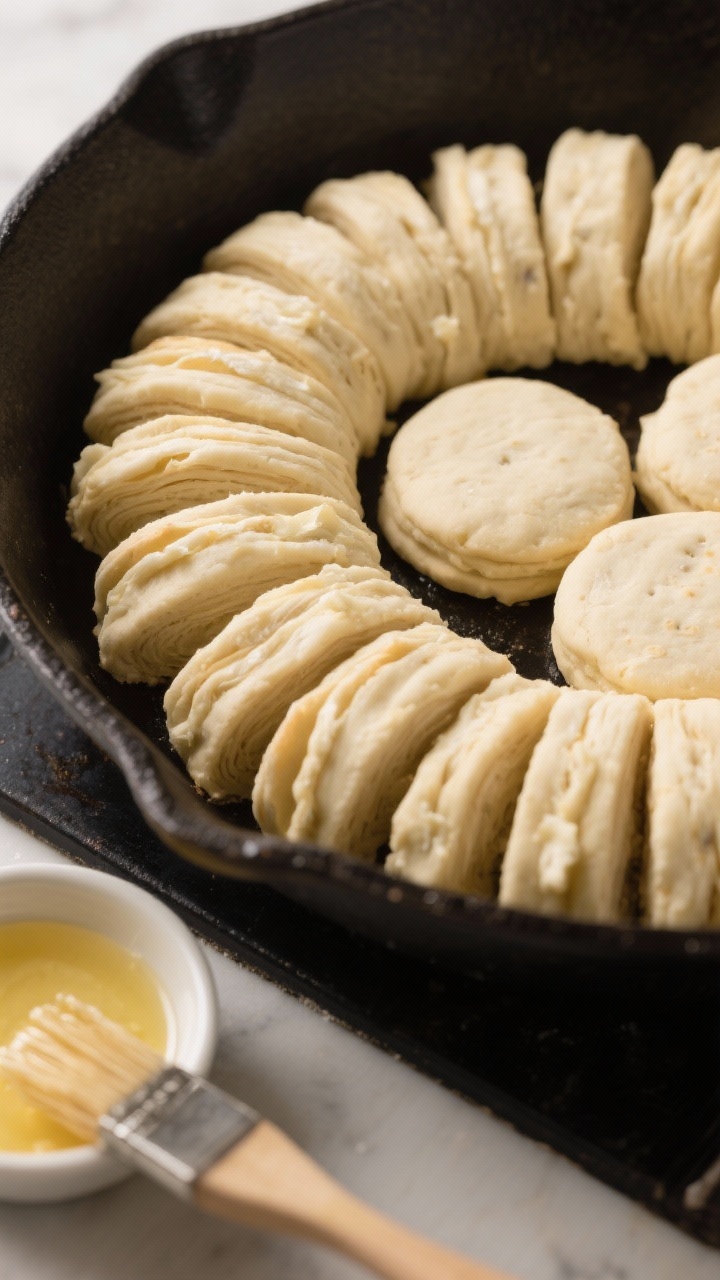
Pair a biscuit with eggs or lean protein and fruit for a balanced breakfast.
If you want to lighten it up, see the variations below. Small tweaks can improve nutrition without losing the signature comfort.
What Not to Do
- Don’t overwork the dough. Tough biscuits happen when gluten develops. Mix just until combined.
- Don’t let the fat warm up. Warm butter = fewer layers.If the dough gets soft, chill 10 minutes before cutting.
- Don’t twist the cutter. Press straight down for a clean edge and maximum rise.
- Don’t bake on a cool oven. High heat is crucial. Preheat fully before baking.
- Don’t skip the salt. It balances the butter and buttermilk. Adjust, but don’t eliminate.
Variations You Can Try
- Cheddar and Chive: Add 3/4 cup shredded sharp cheddar and 2 tablespoons chopped chives to the dry ingredients.
- Honey Butter Glaze: Stir 1 tablespoon honey into the melted butter for brushing.
- Black Pepper Parmesan: Add 1/2 teaspoon fresh cracked pepper and 1/3 cup finely grated Parmesan.
- Buttermilk Substitute: Use 1 cup milk + 1 tablespoon lemon juice or vinegar.Let sit 5 minutes to thicken.
- All-Butter Version: Replace shortening with butter for a purist approach. Slightly less flaky, rich flavor.
- Whole-Wheat Blend: Swap 1 cup of the self-rising flour with white whole-wheat flour. Add 1/2 teaspoon extra baking powder to maintain lift.
- Spicy Breakfast Biscuit: Fold in 1/2 cup finely chopped cooked bacon or country ham and a pinch of cayenne.
FAQ
Can I use all-purpose flour instead of self-rising?
Yes.
Use 2 1/2 cups all-purpose flour, 1 tablespoon baking powder, 1/2 teaspoon baking soda, and 1 teaspoon kosher salt. Proceed as written.
Why both butter and shortening?
Butter brings flavor and some steam-driven lift. Shortening stays solid longer, giving extra flake.
The combo is classic for tall, layered biscuits, but all-butter still works well.
How do I get my biscuits even taller?
Keep everything cold, pat to a full 1 inch thick, and place biscuits so they touch. You can also chill the cut biscuits for 10 minutes before baking to set the fat.
My dough is sticky. Did I mess up?
Probably not.
Biscuit dough should be slightly sticky. Lightly flour your hands and the surface, and use a bench scraper to help. Resist the urge to add too much extra flour.
How do I prevent dry, crumbly biscuits?
Measure flour by fluffing and leveling, don’t overbake, and avoid overmixing.
A bit more buttermilk can help if the dough seems dry.
What’s the best size cutter?
About 2 1/4 to 2 1/2 inches. Smaller will bake faster and may dry out; larger need an extra minute or two.
Can I make them in a cast-iron skillet?
Absolutely. Preheat the skillet in the oven, lightly butter it, and arrange the biscuits touching.
Bake as directed for a deep golden bottom.
In Conclusion
This Bojangles style biscuit recipe gives you height, layers, and buttery flavor with straightforward steps. Keep your ingredients cold, handle the dough gently, and bake hot. Whether you’re making breakfast sandwiches or serving them with dinner, these biscuits bring that comfort-food charm every time.
Printable Recipe Card
Want just the essential recipe details without scrolling through the article? Get our printable recipe card with just the ingredients and instructions.