

This chocolate sourdough bread is a cozy, bakery-style loaf you can make at home. It has a deep cocoa flavor, gentle sweetness, and that classic sourdough tang. The crust bakes up dark and crisp, while the crumb stays soft, moist, and studded with melty chocolate.
It’s great for breakfast with butter, afternoon coffee, or as a decadent base for French toast. If you’re looking for a sourdough recipe that feels special but still practical, this is it.
Why This Recipe Works
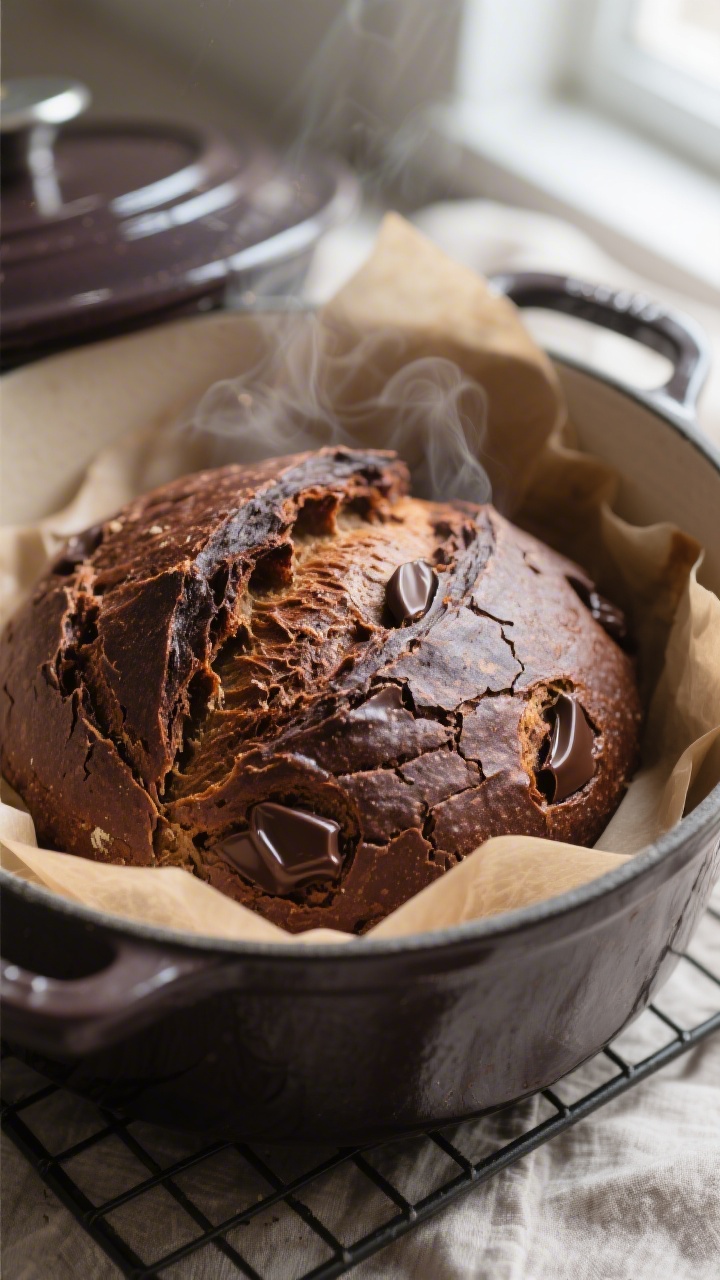
This loaf balances flavor and structure. Cocoa powder adds chocolate depth without making the dough heavy, while chocolate chips or chunks melt into pockets of richness.
The sourdough starter provides fermentation power and a touch of acidity, which keeps the crumb tender.
Hydration stays moderate so the dough is workable, even for newer bakers. A long, cool proof develops flavor without rushing fermentation. Finally, baking in a preheated Dutch oven traps steam for great oven spring and a shiny, crackly crust.
Shopping List
- Active sourdough starter (100% hydration, bubbly and ripe)
- Bread flour (you can sub some all-purpose if needed)
- Cocoa powder (unsweetened, Dutch-processed preferred)
- Granulated sugar or light brown sugar
- Salt (fine sea salt or kosher)
- Warm water
- Chocolate chips or chopped dark chocolate (60–70% cocoa works well)
- Optional add-ins: espresso powder, vanilla extract, orange zest, chopped toasted nuts
- Rice flour (for dusting the banneton; all-purpose works in a pinch)
Step-by-Step Instructions

- Feed your starter. 6–8 hours before mixing, feed your starter so it’s bubbly and doubled.You’ll need about 120 g (1/2 cup) active starter for this recipe.
- Mix the dry ingredients. In a large bowl, whisk 400 g bread flour (about 3 1/3 cups), 40 g cocoa powder (about 1/2 cup), 30–50 g sugar (2–4 tbsp, adjust to taste), and 8 g salt (1 1/2 tsp). Make sure there are no cocoa lumps.
- Combine wet ingredients. In a separate bowl, mix 260–280 g warm water (about 1 1/8 cups; start on the lower end), 120 g active starter (1/2 cup), and, if using, 1 tsp vanilla extract or 1 tsp espresso powder dissolved in the water.
- Bring the dough together. Pour wet into dry and mix with a dough whisk or your hand until no dry spots remain. The dough will feel sticky and slightly stiff from the cocoa.Rest 20–30 minutes (autolyse) to let the flour hydrate.
- Add chocolate. Gently fold in 120–180 g chocolate chips or chunks (3/4–1 cup). If the dough feels too tight, wet your hands and fold in stages. Aim for even distribution without tearing the dough.
- Bulk fermentation. Cover and rest at warm room temperature (75–78°F / 24–26°C) for 3–4 hours.During the first 90 minutes, perform 3–4 sets of stretch-and-folds every 30 minutes. The dough should become smoother, slightly puffy, and more elastic.
- Check fermentation. By the end of bulk, the dough should have risen 30–50% and show bubbles along the edges. If it’s sluggish, give it another 30–60 minutes.Don’t wait for a full double; cocoa doughs often rise a bit less.
- Pre-shape. Lightly flour the counter, turn out the dough, and use a bench scraper to form a loose round. Rest 15–20 minutes uncovered to relax the gluten.
- Final shape. Shape into a tight boule or batard. Keep the chocolate mostly inside the dough to prevent burning on the crust.Place seam-side up in a rice flour–dusted banneton or a towel-lined bowl.
- Cold proof. Cover and refrigerate 8–14 hours. This slow proof improves flavor, makes scoring easier, and helps the loaf hold its shape.
- Preheat the oven. Place a Dutch oven with its lid inside your oven and preheat to 475°F (245°C) for at least 30 minutes. The hot pot creates steam for maximum oven spring.
- Score and bake with steam. Turn the dough onto parchment, score with a sharp lame or knife (a deep central slash works well), and carefully lower it into the hot Dutch oven.Cover and bake 20 minutes.
- Finish uncovered. Reduce heat to 450°F (232°C), remove the lid, and bake 18–25 minutes more until the crust is dark brown and crisp. Internal temp should reach around 205–210°F (96–99°C).
- Cool completely. Transfer to a rack and wait at least 1–2 hours before slicing. This sets the crumb and prevents gumminess.
Storage Instructions
- Room temperature: Store cut-side down on a board or in a paper bag for up to 2 days.Avoid sealed plastic, which softens the crust.
- Freezer: Slice, wrap tightly, and freeze for up to 2 months. Toast slices straight from frozen.
- Refresh: If the crust loses its snap, warm the loaf at 325°F (165°C) for 8–10 minutes to re-crisp.

Benefits of This Recipe
- Flavor-forward: Cocoa, sourdough tang, and bittersweet chocolate create a balanced, not-too-sweet profile.
- Flexible timing: The cold proof fits around your schedule and builds complexity.
- Better texture: Natural fermentation gives a soft, moist crumb without added fats.
- Showstopper loaf: The dark crust and chocolate pockets make it a standout for gifts or brunch.
Pitfalls to Watch Out For
- Underactive starter: A weak starter leads to a dense loaf. Make sure it’s bubbly, doubled, and passes the float test before mixing.
- Too much hydration: Cocoa absorbs water differently.Start low and add a splash if the dough feels stiff during folds.
- Overproofing: Chocolate dough can be trickier to read. Look for 30–50% rise and a jiggly, airy feel—don’t wait for a full double.
- Burnt chocolate on the crust: Tuck chips inside during shaping to avoid bitter, scorched spots.
- Slicing too soon: Warm chocolate smears and compresses the crumb. Let it cool fully for clean slices.
Variations You Can Try
- Orange chocolate: Add 1–2 tsp finely grated orange zest to the dough and a dash of vanilla.
- Mocha loaf: Stir 1–2 tsp espresso powder into the mixing water for a subtle coffee note.
- Cherry chocolate: Fold in 1/2 cup chopped dried cherries (soak briefly in warm water, then pat dry) with the chocolate.
- Nutty crunch: Add 1/2 cup toasted hazelnuts, pecans, or almonds for texture.
- Sweet-stout twist: Replace 60–80 g of the water with a dark stout for malty depth.Adjust salt slightly to taste.
FAQ
Can I make this without a Dutch oven?
Yes. Preheat a baking stone or steel at 475°F (245°C) and place a metal pan on a lower rack. Load the loaf onto the stone, pour a cup of hot water into the pan to create steam, and bake as directed.
The crust may be slightly different but still excellent.
Can I use all-purpose flour instead of bread flour?
You can swap in up to 50–100% all-purpose flour. The dough may feel softer and spread a bit more, so consider reducing water by 10–20 g to start and strengthen with an extra set of folds.
How sweet is this bread?
It’s lightly sweet, more like a dark chocolate loaf than cake. For a dessert-leaning version, use the higher end of the sugar range and add sweet mix-ins like milk chocolate chips or cinnamon sugar butter when serving.
Can I add milk or butter to the dough?
Yes, but keep it modest to avoid slowing fermentation.
Add up to 25 g melted butter and reduce water by the same amount. Expect a softer crumb and slightly richer flavor.
What if my dough isn’t rising?
Warm it up to 78–80°F (25–27°C) and give it more time. If the starter was underfed, mix in 1–2 extra sets of folds to build strength, or wait until your next bake when the starter is stronger.
Cooler rooms will extend bulk by 1–2 hours.
How do I know when it’s baked through?
Look for a firm, deeply browned crust and an internal temperature around 205–210°F (96–99°C). The loaf should feel light for its size and sound hollow on the bottom when tapped.
Can I make rolls instead of a loaf?
Yes. After bulk, divide into 8–10 pieces, shape into tight rounds, proof for 1–2 hours at room temperature, and bake at 425°F (220°C) for 16–20 minutes until dark and set.
Does the cocoa affect gluten development?
Cocoa doesn’t form gluten and can make the dough feel stiffer.
That’s why we keep hydration moderate, rest after mixing, and use gentle folds to build structure without tearing.
What chocolate type works best?
Dark chocolate in the 60–70% range melts nicely without being too sweet. If you prefer sweeter bites, use a mix of semi-sweet and milk chocolate. Chop bars for bigger pools; chips hold their shape more.
How should I serve it?
It’s great plain, with salted butter, or a swipe of cream cheese.
For a treat, make French toast or grill slices with a smear of hazelnut spread and a sprinkle of flaky salt.
Wrapping Up
Chocolate sourdough bread feels indulgent but still keeps the heart of classic sourdough: great texture, deep flavor, and a satisfying bake. With a lively starter, patient proof, and a hot bake, you’ll get a beautiful, dark loaf with a tender crumb and chocolate pockets. Keep the process simple, watch your dough, and enjoy a slice warm with butter or alongside your morning coffee.
Once you make it, it’s likely to become part of your regular baking rotation.
Printable Recipe Card
Want just the essential recipe details without scrolling through the article? Get our printable recipe card with just the ingredients and instructions.


