
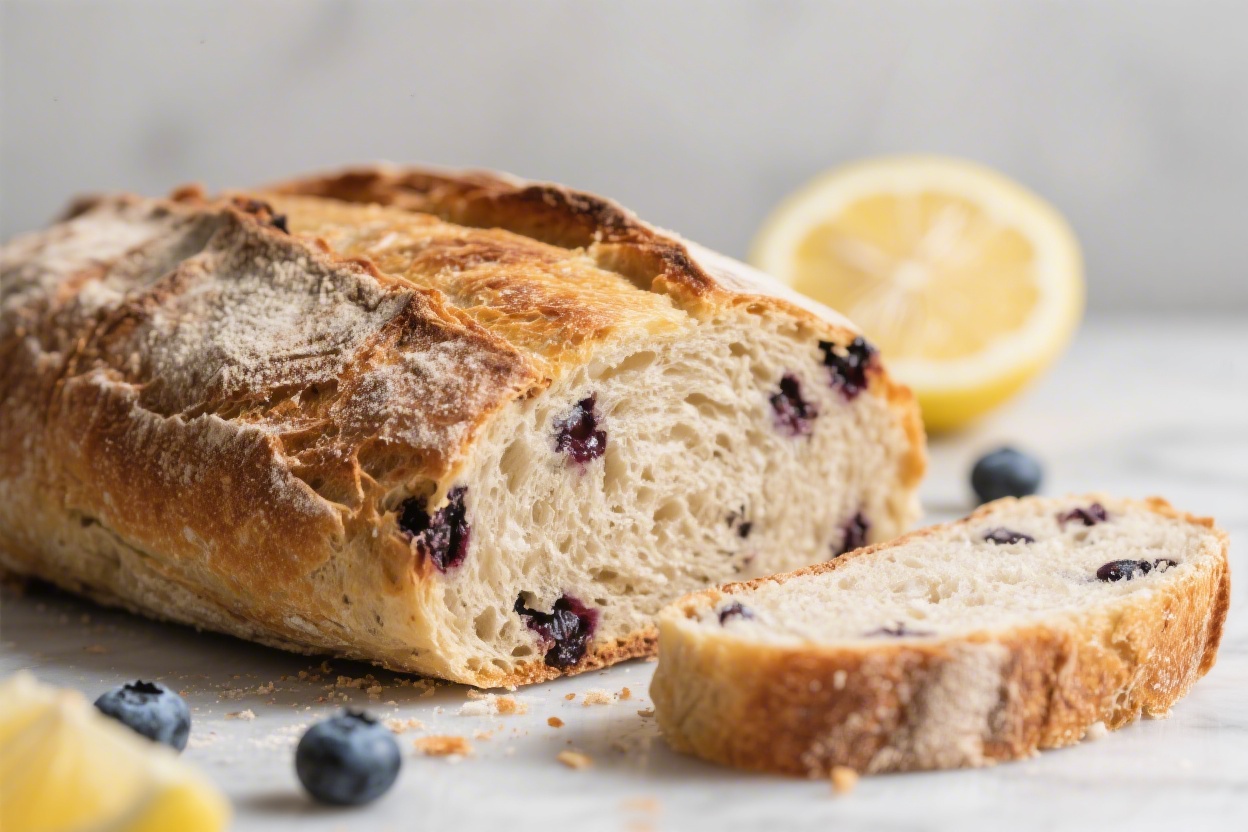
This loaf brings the best of summer into a cozy sourdough. You get a tender crumb, juicy blueberries, and a fresh pop of lemon with every slice. It’s not too sweet, so it works for breakfast, snacking, or even alongside a cheese board.
If you’ve baked simple sourdough before, this is a fun upgrade. And if you’re new, don’t worry—each step is easy to follow and forgiving.
What Makes This Recipe So Good
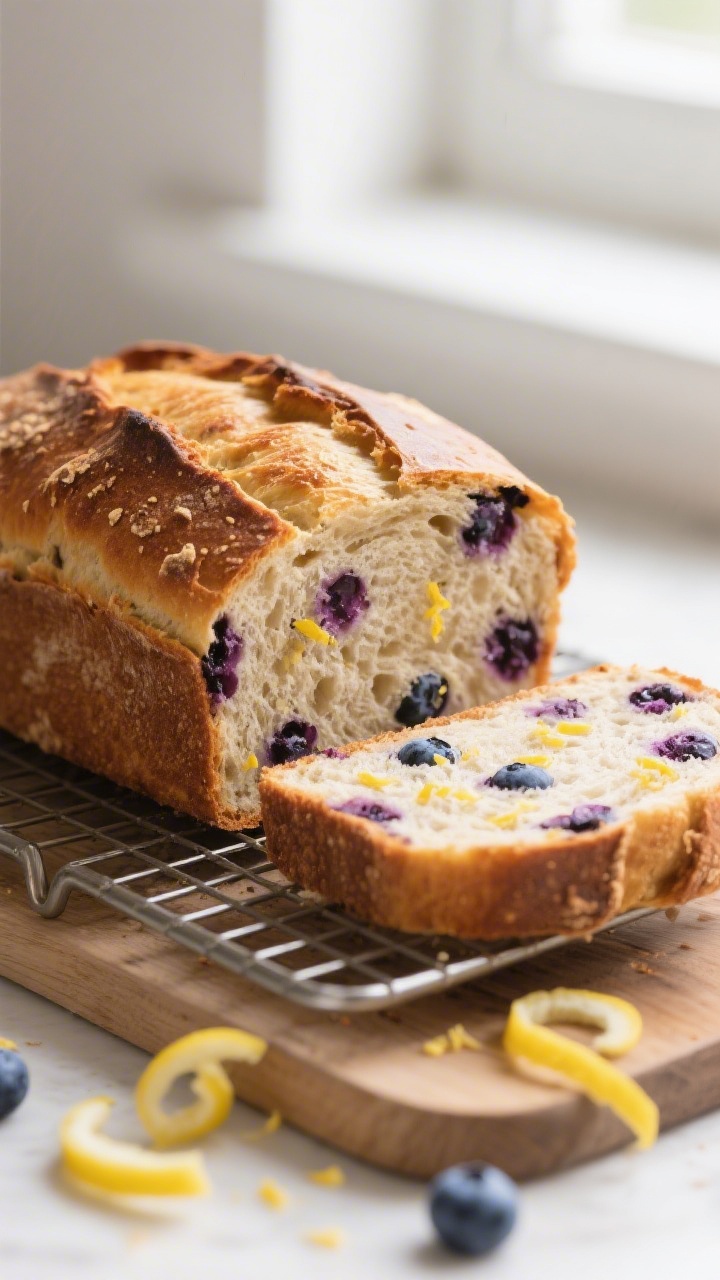
- Fresh, bright flavor: Lemon zest and juice balance the sweetness of blueberries without turning the bread into dessert.
- Soft, moist crumb: Sourdough hydration keeps the loaf tender while still giving you structure and chew.
- Naturally leavened: No commercial yeast needed. Your active starter does the heavy lifting for rise and flavor.
- Beautiful texture: Bursts of blueberries throughout, plus a golden crust that’s crisp but not hard.
- Flexible timing: Fits into a regular sourdough schedule with an overnight cold proof for convenience.
What You’ll Need
- Active sourdough starter: 100% hydration, bubbly and ripe.
- Bread flour: For structure and a good rise.
- All-purpose flour: Softens the crumb slightly.
- Water: Room temperature.
- Salt: Fine sea salt or kosher salt.
- Lemon zest: Freshly grated for the most fragrance.
- Lemon juice: Freshly squeezed; a little goes a long way.
- Blueberries: Fresh or frozen; small, firm berries hold up best.
- Optional add-ins: Vanilla extract, a touch of honey, or poppy seeds.
- For baking: Rice flour or all-purpose flour for dusting, and a Dutch oven or baking stone with steam.
How to Make It
- Feed your starter: Make sure it’s active and at peak.It should double in 4–6 hours, look bubbly, and pass a float test.
- Mix the leaven: In a small bowl, blend a portion of starter with warm water and a bit of flour (taken from the recipe). Let it sit until puffy—usually 2–3 hours.
- Autolyse the dough: In a large bowl, combine bread flour, all-purpose flour, and most of the water until no dry spots remain. Rest 30–45 minutes.This relaxes the dough and improves gluten development.
- Add leaven, salt, and lemon: Work the leaven into the dough, then add salt, remaining water if needed, lemon zest, and a small splash of lemon juice. Mix until cohesive. The dough should feel tacky but not soupy.
- Bulk ferment with folds: Over 2.5–3.5 hours at room temperature, perform 3–4 sets of stretch-and-folds every 30 minutes.Keep movements gentle to build strength without tearing the dough.
- Add the blueberries: After the first or second fold, gently fold in blueberries. If using frozen, add them straight from the freezer to reduce streaking. Distribute evenly, being careful not to crush them.
- Watch for readiness: By the end of bulk, the dough should be slightly domed, airy, and jiggle when the bowl is shaken.Aim for about 50–70% rise, not doubled.
- Pre-shape: Lightly flour your surface. Turn out the dough, shape it into a loose round, and let it rest uncovered for 15–20 minutes to relax.
- Final shape: Shape into a boule or batard. Keep the seam tight to hold blueberries in.If any berries peek out, pinch dough over them to prevent burning.
- Proof: Place the dough seam-side up in a well-floured banneton or a bowl lined with a floured towel. Cover and refrigerate 8–16 hours for a cold retard. This firms the dough and deepens flavor.
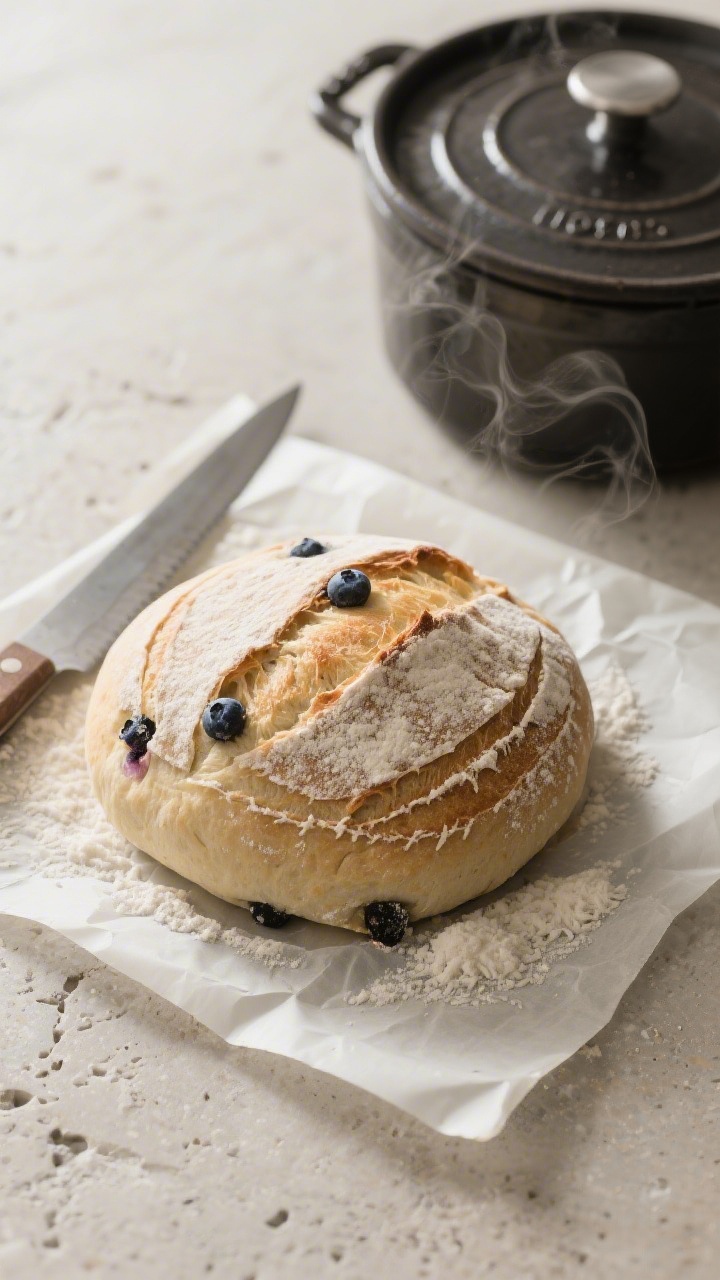
- Preheat: Place a Dutch oven in your oven and preheat to 475°F (245°C) for at least 30 minutes.Hot equipment equals better oven spring.
- Score and bake: Turn the dough onto parchment, score with a sharp lame, and carefully lower it into the hot Dutch oven. Cover and bake 22–25 minutes. Uncover, reduce heat to 450°F (230°C), and bake 18–25 minutes more until deep golden.
- Cool completely: Let the loaf cool on a rack at least 1–2 hours before slicing.This sets the crumb and locks in moisture.
How to Store
- Room temperature: Keep the loaf cut-side down on a board or in a paper bag for up to 2 days. Avoid sealing in plastic—it softens the crust.
- Longer storage: Slice, then freeze in a zip-top bag with the air pressed out. Toast straight from frozen.
- Avoid the fridge: Refrigeration speeds staling and can dull the lemon aroma.
Benefits of This Recipe
- Balanced sweetness: It’s fruity but not sugary, making it versatile for breakfast or snacks.
- Gut-friendly fermentation: Natural leavening can be easier to digest for some people.
- Seasonal flexibility: Works with fresh berries in summer or frozen year-round.
- Great for gifting: It looks impressive and smells amazing—no frosting or glaze required.
What Not to Do
- Don’t add too much lemon juice: Acid can weaken gluten.Stick to zest for most of the flavor and just a small amount of juice.
- Don’t over-hydrate: Blueberries release moisture. If your dough feels too wet, hold back a little water at mixing.
- Don’t mash the berries: Rough handling smears the crumb and can create gummy pockets.
- Don’t rush the cool-down: Cutting into hot bread makes the crumb gummy and collapses structure.
- Don’t skip salt: It strengthens gluten and balances the sweetness and lemon.
Recipe Variations
- Lemon poppy seed: Add 1–2 teaspoons poppy seeds with the zest for a subtle crunch.
- Honey vanilla: Add 1–2 tablespoons honey and 1 teaspoon vanilla extract during mixing for a dessert-leaning loaf.
- Almond crunch: Fold in 1/3 cup sliced almonds with the berries and finish the crust with a light sprinkle of sugar.
- Citrus swap: Use orange or Meyer lemon zest for a softer citrus note.
- Whole grain boost: Replace 15–20% of the white flour with whole wheat for nuttier depth. Add a splash more water if needed.
FAQ
Can I use frozen blueberries?
Yes.
Use them straight from the freezer so they don’t bleed into the dough. Add them gently during folds and expect the dough to feel slightly colder and firmer, which is fine.
How do I know my starter is ready?
It should be bubbly, smell pleasantly tangy, and roughly double after feeding. A small spoonful should float in water.
If it sinks, give it more time or another feeding.
Do I need a Dutch oven?
It helps trap steam for great oven spring and crust. If you don’t have one, bake on a preheated stone or sheet pan and add steam by placing a tray of boiling water on the bottom rack for the first 15 minutes.
My dough feels too wet. What should I do?
Blueberries add moisture.
Lightly flour your hands during folds, and hold back 5–10% of the recipe’s water during mixing next time. Gentle handling and a thorough cool-down will also help set the crumb.
When should I add the lemon?
Add zest with the salt and leaven. Use only a small amount of juice at that point.
Most of the citrus punch comes from zest, which doesn’t disrupt gluten as much.
Can I make two smaller loaves?
Yes. Divide after bulk ferment, pre-shape and shape each piece, and proof in two smaller bannetons. Bake one at a time, reducing bake time slightly and keeping an eye on color.
What’s the best way to slice it?
Use a sharp serrated knife and gentle sawing motions.
If the crust is very crisp, invert the loaf and slice from the bottom for cleaner cuts through the berries.
How sweet is this bread?
It’s lightly sweet from the fruit. If you want more sweetness, add 1–2 tablespoons honey during mixing or serve with lemon curd, jam, or a drizzle of maple syrup.
Can I add a glaze?
You can whisk powdered sugar with lemon juice and drizzle over fully cooled slices for a dessert vibe. It’s optional—the loaf stands on its own.
What if my loaf bursts on the side?
That’s usually under-proofing or shallow scoring.
Next time, proof a bit longer and make one confident, deep score about 1/4 inch to 1/2 inch, depending on dough strength.
Final Thoughts
Blueberry Lemon Sourdough Bread is the kind of loaf that makes your kitchen smell like sunshine. It’s simple enough for a weekend bake but special enough to share. With a lively starter, gentle folds, and patience during cooling, you’ll get a sliceable, juicy, lemony crumb every time.
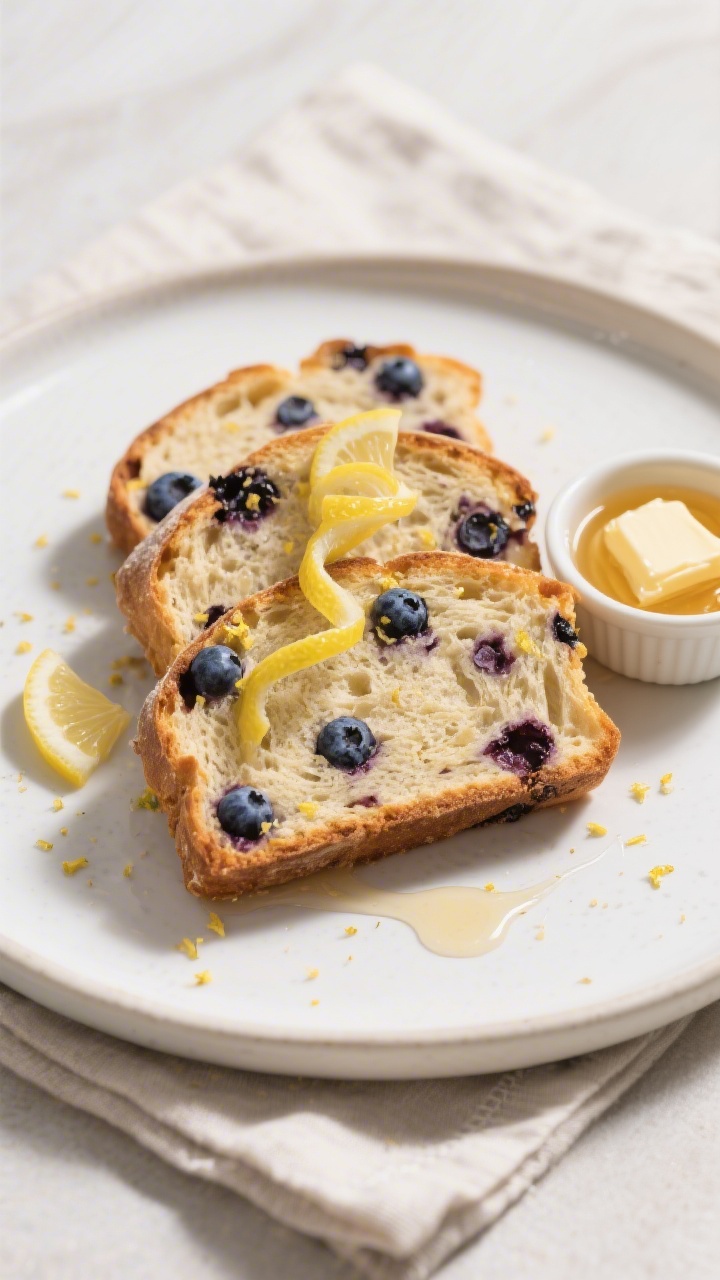
Toast it with butter, pair it with yogurt and honey, or enjoy it plain—it’s bright, cozy, and absolutely worth making.