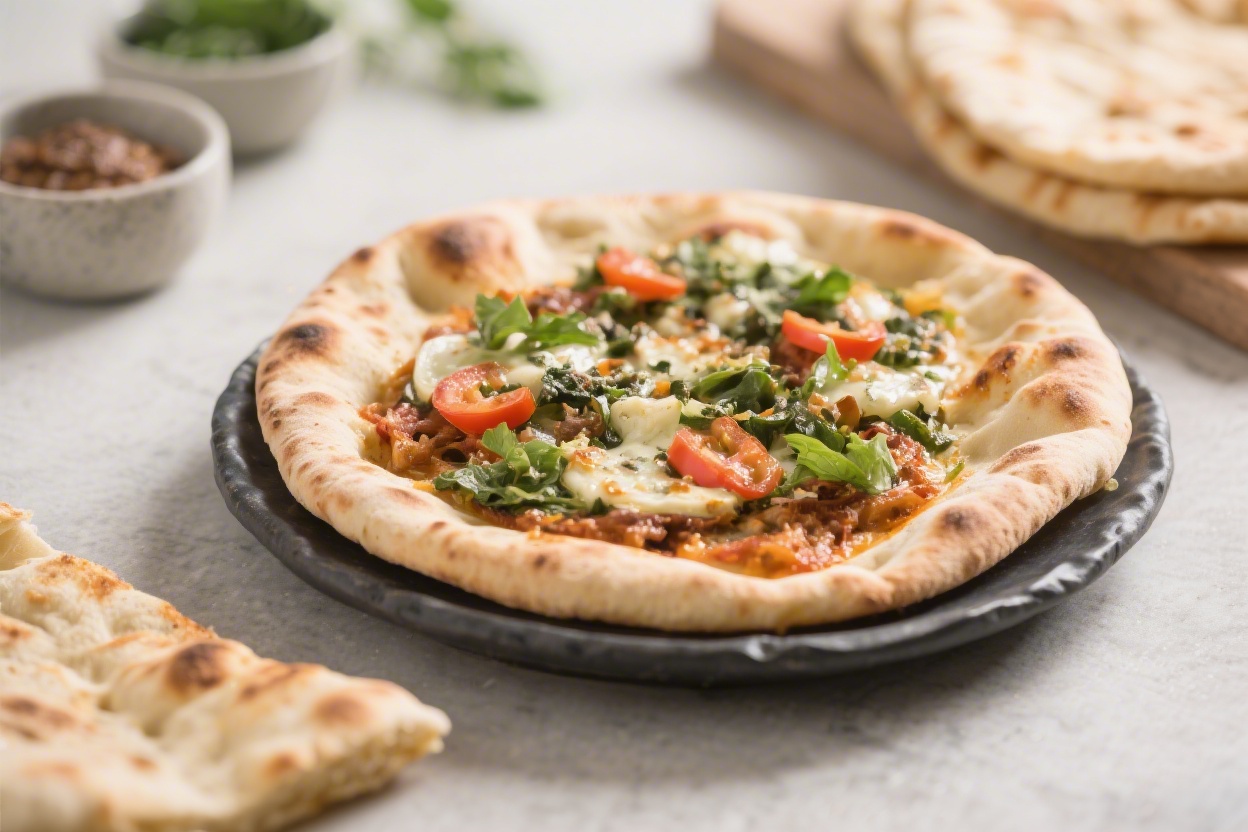
Flat bread is the kind of recipe you’ll make once and wonder why you ever bought it. It comes together with pantry staples, cooks in just a few minutes, and pairs with nearly anything. You can wrap it around grilled meat or veggies, scoop up dips, or serve it with soup.
The best part is how forgiving it is—no fancy equipment or special technique required. Whether you’re new to bread-making or just after a quick win, these flat bread recipes will become a go-to.
What Makes This Special
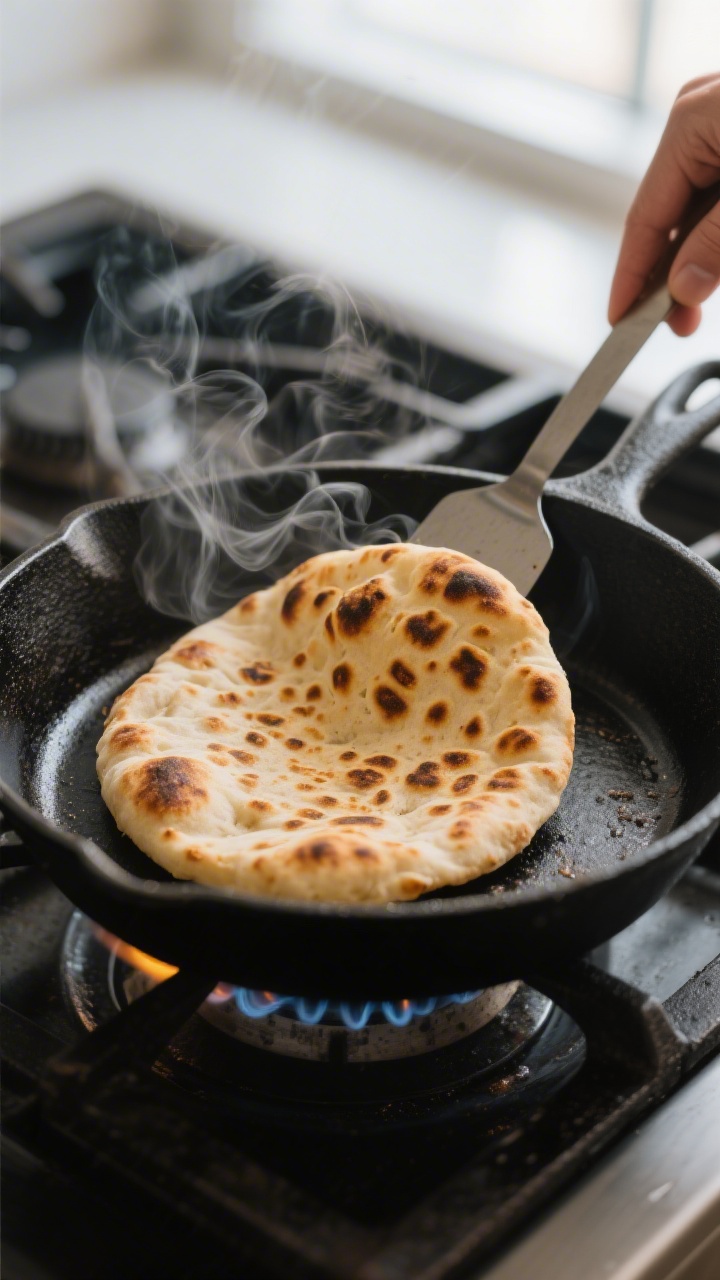
This flat bread hits the sweet spot between soft and chewy. It cooks on the stovetop, so you skip the oven and still get great texture.
The dough is easy to handle and doesn’t demand long resting times. With one base recipe, you can make pita-style pockets, naan-style soft rounds, or crispy tortillas. It’s flexible enough for weeknights and worthy of a weekend spread.
What You’ll Need
- All-purpose flour (2 1/2 cups) – Gives structure and a soft crumb.You can swap part with whole wheat for a heartier bite.
- Warm water (3/4 to 1 cup) – Helps hydrate the dough. Aim for bath-warm, not hot.
- Plain yogurt (1/2 cup, optional) – Adds tenderness and a slight tang for naan-style flat bread.
- Olive oil or melted butter (2 tablespoons) – For moisture and flavor.
- Instant yeast (1 teaspoon) or baking powder (1 1/2 teaspoons) – Yeast yields more chew and puff; baking powder gives a quick, soft bread.
- Sugar or honey (1 teaspoon, optional) – Feeds yeast and balances flavor.
- Salt (1 teaspoon) – Essential for taste.
- Extra flour – For dusting the counter.
- Butter or ghee (optional) – For brushing warm flat bread.
Instructions
- Choose your leavening. For chewier, puffier flat bread, use yeast. For a faster, softer bread, use baking powder.Both work well, so pick based on time.
- Mix the dough. In a large bowl, combine flour and salt. Add instant yeast (or baking powder). Stir in yogurt (if using), olive oil, and 3/4 cup warm water.Add more water a tablespoon at a time until a soft, slightly tacky dough forms.
- Knead briefly. Turn the dough onto a floured surface and knead for 3–5 minutes, until smooth and elastic. If it sticks, dust with a bit more flour, but keep it soft.
- Rest the dough. For yeast dough: cover and let rest 30–45 minutes, until slightly puffy. For baking powder dough: rest 10–15 minutes to relax the gluten.This makes rolling easier.
- Portion and shape. Divide into 6–8 equal balls. Keep covered with a towel to prevent drying. Roll each ball into a circle or oval, about 1/8–1/4 inch thick.
- Preheat your pan. Heat a heavy skillet or cast iron pan over medium to medium-high.It should be hot enough that a drop of water sizzles on contact.
- Cook the flat bread. Lay one round in the dry pan. Cook until bubbles form and the bottom has golden-brown spots, 1–2 minutes. Flip and cook another 1–2 minutes.Adjust heat as needed to avoid burning.
- Optional puffing trick. For pita-style pockets, roll slightly thicker and cook in a very hot pan. Press gently with a spatula to encourage puffing.
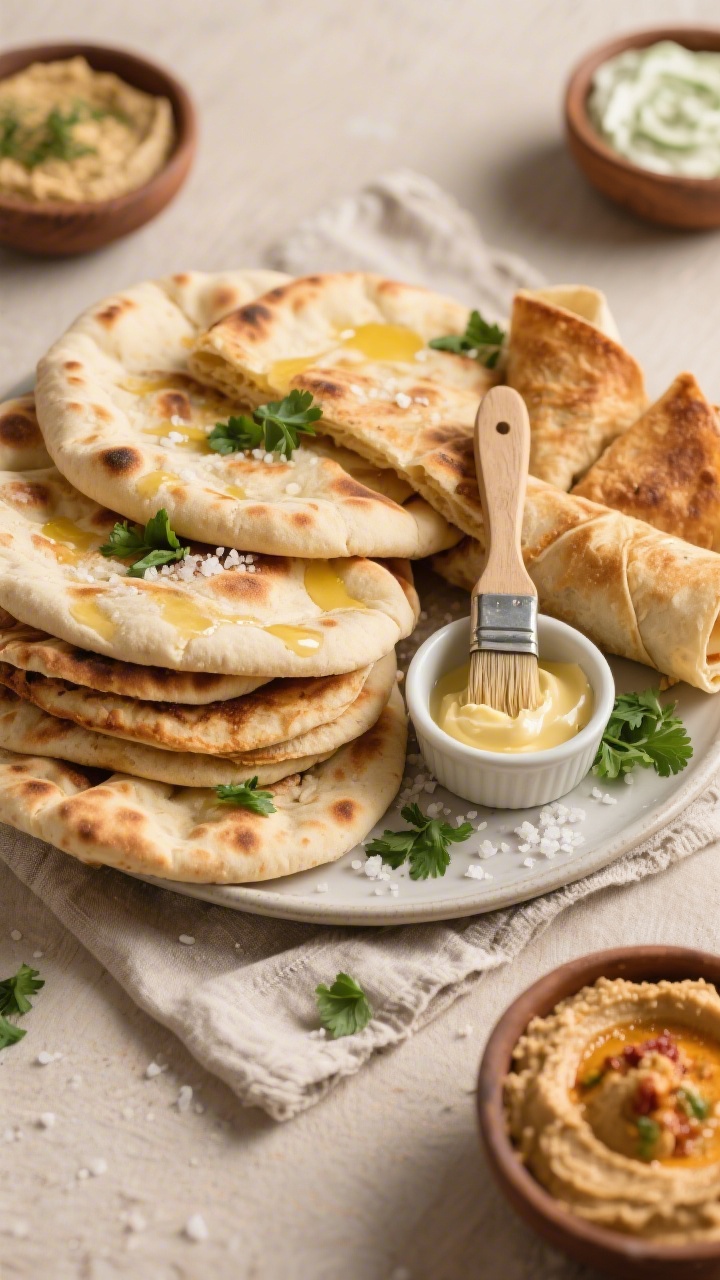
- Finish and keep warm. Brush hot flat bread with butter or ghee and sprinkle with a pinch of salt, garlic, or herbs if you like. Stack on a plate and cover with a clean towel to keep them soft.
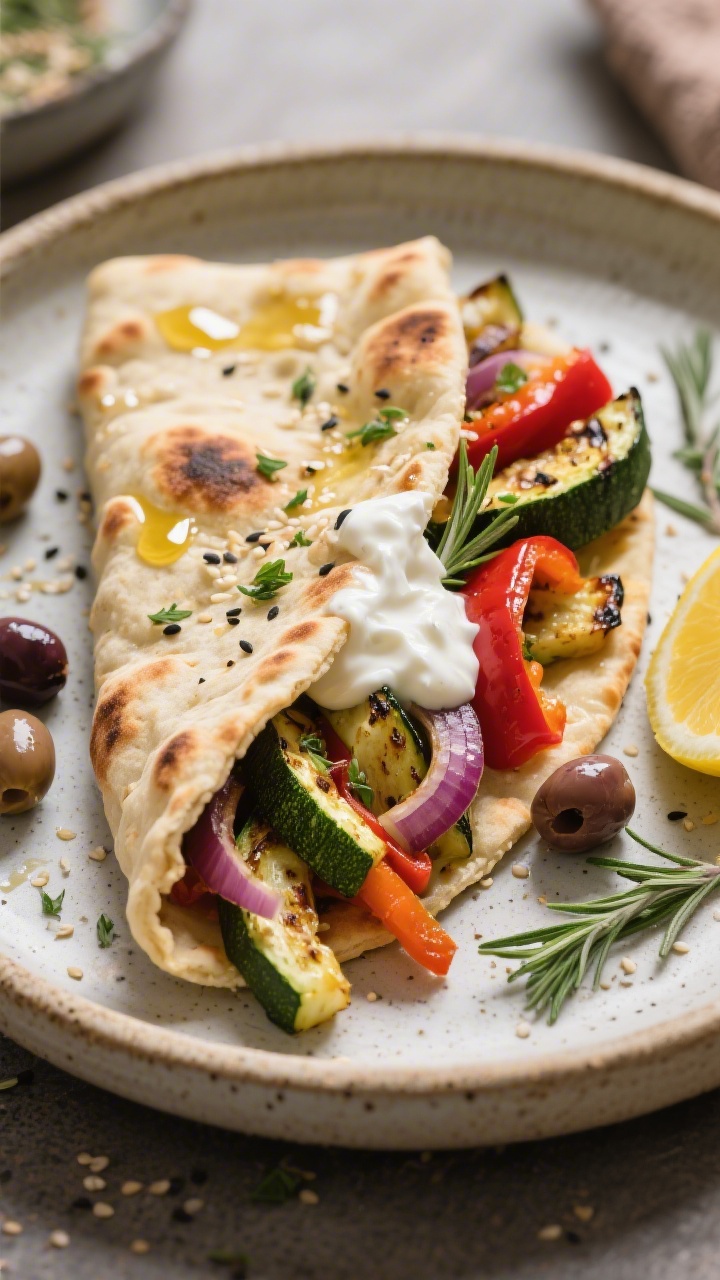
- Serve. Enjoy warm with dips, curries, grilled vegetables, soups, or as a wrap for leftovers.
How to Store
- Room temperature: Keep cooled flat bread in an airtight bag for up to 2 days.Add a paper towel to reduce moisture.
- Refrigerator: Store for 4–5 days if you added yogurt or butter. Warm briefly in a skillet to restore softness.
- Freezer: Freeze in a zip-top bag with parchment between pieces for up to 2 months. Thaw at room temperature or warm directly from frozen in a skillet.
- Reheating: A hot dry skillet or toaster oven works best.Cover with a lid for 20–30 seconds to steam slightly and soften.
Health Benefits
- Simple ingredients: You control the oil, salt, and any added sugars, avoiding preservatives found in store-bought versions.
- Whole grains: Swapping in whole wheat flour boosts fiber, which supports digestion and satiety.
- Protein options: Pairing with hummus, yogurt sauce, beans, or lean meats creates a balanced meal.
- Portion-friendly: Each round is easy to portion, helping you keep servings in check without feeling restricted.
- Lower sodium: Homemade versions often contain less salt than packaged flat breads.
What Not to Do
- Don’t over-flour the dough. Too much flour makes the bread tough. Keep it slightly tacky; light dusting is enough for rolling.
- Don’t skip the rest. Resting relaxes the gluten so the dough rolls easily and cooks evenly.
- Don’t use a cold pan. A hot skillet creates those signature brown spots and a soft-chewy texture.
- Don’t roll too thick or too thin. Too thick stays doughy; too thin gets dry. Aim for 1/8–1/4 inch.
- Don’t stack uncovered. Freshly cooked flat bread dries out fast.Cover with a towel to trap gentle steam.
Recipe Variations
- Garlic Herb Naan-Style: Add 1 teaspoon minced garlic and 1 tablespoon chopped cilantro or parsley to the dough. Brush with garlic butter when hot.
- Whole Wheat Flat Bread: Use 1 1/2 cups all-purpose flour and 1 cup whole wheat. Increase water slightly to keep the dough soft.
- Gluten-Free Option: Use a 1:1 gluten-free flour blend with 1 teaspoon xanthan gum if not already included.Add an extra tablespoon of oil for tenderness.
- Olive and Rosemary: Mix 2 tablespoons finely chopped olives and 1 teaspoon chopped rosemary into the dough for a savory twist.
- Spiced Flat Bread: Add 1 teaspoon cumin seeds, nigella seeds, or sesame seeds. Press some seeds on top before cooking for extra aroma.
- Yogurt-Free, Dairy-Free: Skip yogurt and use water plus olive oil. Brush with olive oil instead of butter.
- Crispy Wraps: Roll thinner and cook slightly longer on lower heat for a pliable but crisp-edged wrap.
FAQ
Can I make the dough ahead of time?
Yes.
For yeast dough, refrigerate up to 24 hours after the first rest. Let it come to room temperature for 30–45 minutes before rolling. For baking powder dough, make it the same day for best rise.
Why isn’t my flat bread puffing?
The pan may not be hot enough, or the dough might be too dry or rolled too thin.
Try a slightly thicker round, ensure a hot skillet, and avoid over-flouring during rolling.
Can I bake these instead of cooking on the stove?
Yes. Bake on a preheated sheet or pizza stone at 475°F (245°C) for 4–6 minutes until puffed and lightly browned. This works especially well for pita-style bread.
What flour works best?
All-purpose flour gives a tender result and is the most forgiving.
You can mix in up to 40–50% whole wheat for a nuttier flavor, adding a splash more water as needed.
How do I keep them soft after cooking?
Stack and cover with a clean towel immediately. The trapped steam keeps the bread supple. You can also brush lightly with butter or oil to lock in moisture.
Can I make them without yeast?
Absolutely.
Use baking powder instead. The texture will be soft and tender rather than chewy, and the dough is ready faster.
What should I serve with flat bread?
Try hummus, tzatziki, curry, grilled chicken, roasted vegetables, shakshuka, or simple scrambled eggs. It also makes a quick pizza base with sauce and cheese.
Is a stand mixer necessary?
No.
This dough mixes easily by hand. A stand mixer is convenient for larger batches, but not required.
Can I add cheese to the dough?
Yes. Fold in 1/2 cup finely grated cheese like cheddar or feta.
Keep the pieces small so they don’t burn on the pan.
In Conclusion
Flat bread is the kind of recipe that rewards you every time—fast to make, easy to customize, and endlessly useful. With a handful of ingredients and a hot pan, you can turn out warm, soft rounds that feel special even on a busy night. Once you try the base method, play with herbs, whole grains, and flavors to suit your meals.
Keep a batch on hand, and you’ll always have a simple solution for wraps, sides, and snacks.
Printable Recipe Card
Want just the essential recipe details without scrolling through the article? Get our printable recipe card with just the ingredients and instructions.