

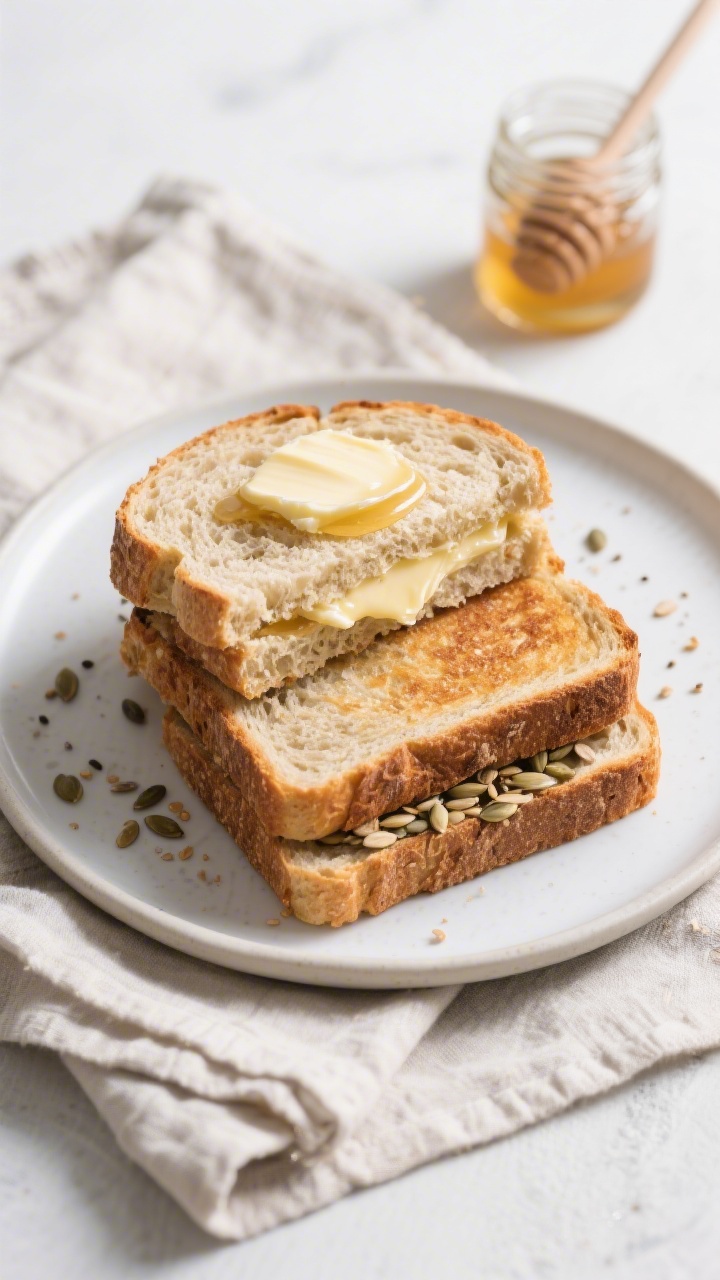
This sandwich bread puts your sourdough discard to work in the best way. It’s soft, sliceable, and perfect for toast or packed lunches. You get a gentle tang without the long wait of a full sourdough loaf.
If you’ve been collecting discard and aren’t sure what to do with it, this is a great place to start. The method is simple, the dough is forgiving, and the result feels like a bakery upgrade to your everyday bread.
Why This Recipe Works

This recipe blends the convenience of commercial yeast with the flavor of sourdough. The discard adds acidity and complexity, while instant yeast handles the rise on a predictable schedule.
That means you can bake on a weeknight and still get great flavor. The dough is enriched with a bit of butter and milk for a soft, tender crumb that slices cleanly for sandwiches. A touch of sugar helps with browning and balances the tang.
What You’ll Need
- Active sourdough discard (100% hydration), 1 cup (about 225 g)
- Bread flour, 3 to 3 1/4 cups (360–390 g), plus extra for dusting
- Warm milk (or water), 3/4 cup (180 ml), about 100–110°F (38–43°C)
- Instant or rapid-rise yeast, 2 teaspoons (or 2 1/4 tsp active dry, bloomed)
- Sugar or honey, 2 tablespoons
- Unsalted butter, 3 tablespoons, softened (or olive oil)
- Salt, 1 1/2 teaspoons
- Egg, 1 large (optional, for richer crumb)
- Neutral oil or butter for greasing
- Milk or egg wash for brushing the top (optional)
- 9×5-inch loaf pan and plastic wrap or a clean towel
Instructions

- Warm the liquid: Heat the milk until it’s warm to the touch, not hot.If using active dry yeast, stir it into the warm milk with a pinch of sugar and let it sit 5–10 minutes until foamy.
- Mix the wet ingredients: In a large bowl, combine sourdough discard, warm milk, sugar, butter, and the egg (if using). Stir until mostly smooth. Add instant yeast if you didn’t proof active dry.
- Add the dry ingredients: Sprinkle in 3 cups of bread flour and the salt.Mix with a spatula or dough hook until a shaggy dough forms. If it’s very sticky, add up to 1/4 cup more flour, a tablespoon at a time.
- Knead to smooth: Knead on a lightly floured surface or in a stand mixer for 8–10 minutes. Aim for a soft, slightly tacky dough that pulls away from the bowl and forms a smooth ball. Windowpane test: A small piece should stretch thin without tearing easily.
- First rise: Place the dough in a lightly oiled bowl, turning once to coat.Cover and let rise in a warm spot until doubled, about 60–90 minutes, depending on room temp.
- Shape the loaf: Gently press the dough into a rectangle about 8×12 inches. Roll it up tightly from the short side, pinching the seam. Tuck the ends under and place seam-side down in a greased 9×5-inch pan.
- Second rise: Cover loosely and let rise until the dough crowns about 1 inch over the rim in the center, 45–75 minutes.If you gently press the side with a fingertip, it should spring back slowly, leaving a slight impression.
- Preheat and glaze: Preheat the oven to 350°F (175°C). Brush the top with milk or egg wash for sheen and color, if you like.
- Bake: Bake 30–38 minutes, until the top is deep golden and the loaf sounds hollow when tapped. An instant-read thermometer should read 190–195°F (88–90°C) in the center.
- Cool properly: Remove from the pan after 5 minutes and cool on a wire rack for at least 1 hour before slicing.This sets the crumb and keeps it from squishing.
How to Store
- Room temperature: Wrap the cooled loaf in a clean tea towel or store in a bread box for up to 3 days. For extra softness, use a zip-top bag once fully cool.
- Freeze: Slice, then freeze in a zip-top bag with parchment between slices. Toast straight from the freezer.
- Refresh: If the crust softens too much, crisp slices in a toaster or warm the loaf at 325°F (165°C) for 8–10 minutes.
Health Benefits
Sourdough discard adds mild acidity, which can help make the bread easier to digest for some people compared to standard white bread.
The fermentation byproducts bring trace nutrients and flavor with minimal added fat. Using milk and a small amount of butter keeps the crumb soft without heavy enrichment. You also control the ingredients—no preservatives or excessive sugar—making this a wholesome, everyday loaf.
What Not to Do
- Don’t use old, off-smelling discard: If it smells like nail polish remover or is gray and hoochy, refresh your starter first.
- Don’t over-flour the dough: A slightly tacky dough bakes softer.Too much flour leads to a dense crumb.
- Don’t rush the rises: Time is a guideline; volume is the goal. Bake only when it’s risen properly.
- Don’t slice hot: Cutting too soon compresses the crumb and makes it gummy.
- Don’t overbake: Check color and internal temp. Overbaking dries out the loaf quickly.
Recipe Variations
- Whole Wheat Twist: Swap 1 cup of bread flour for whole wheat.Add 1 tablespoon of milk or water if the dough feels stiff.
- Honey-Oat Loaf: Add 1/2 cup rolled oats and use honey as the sweetener. Brush the top with milk and sprinkle oats before baking.
- Garlic-Herb Bread: Mix in 1–2 teaspoons dried herbs and 1–2 cloves minced garlic. Great for savory sandwiches and toast.
- Seeded Sandwich Bread: Fold in 3 tablespoons mixed seeds (sesame, sunflower, flax).Press a few on top for crunch.
- Dairy-Free: Use warm water and olive oil instead of milk and butter. The crumb will be slightly less plush but still soft.
FAQ
Can I make this without commercial yeast?
Yes, but the timing changes. Use very active sourdough starter (not discard) at 30–40% of the flour weight, skip the instant yeast, and extend bulk fermentation until doubled.
Expect a longer rise and a tangier flavor.
What hydration is the discard?
This recipe assumes 100% hydration discard (equal parts flour and water by weight). If your discard is thicker or thinner, adjust with a tablespoon or two of milk or flour to achieve a soft, tacky dough.
Can I knead by hand?
Absolutely. It may take a few minutes longer.
Use a brief rest (autolyse) after mixing—let the shaggy dough sit 15 minutes—then knead. This relaxes the dough and makes hand kneading easier.
Why did my loaf sink or wrinkle on top?
It likely overproofed. Next time, bake when the dough rises just over the pan and springs back slowly when poked.
Also avoid too-warm proofing environments that race the rise.
How tangy will this bread taste?
Mildly tangy. Discard brings flavor, but the yeast-driven rise keeps it balanced. For more tang, use older discard (still fresh-smelling) or refrigerate the shaped loaf overnight and bake the next day.
Can I use all-purpose flour?
Yes.
Reduce the milk slightly at first and add as needed. All-purpose flour absorbs less liquid, so start on the lower end and adjust to a soft, tacky feel.
Is the egg necessary?
No. It adds richness and color, but the bread works great without it.
If skipping, you may need a teaspoon or two more milk to keep the dough supple.
Final Thoughts
Sourdough discard sandwich bread gives you the best of both worlds: everyday ease and bakery flavor. It’s simple to mix, quick to rise, and satisfying to slice. Keep the dough soft, watch the proof, and let it cool before cutting.
Once you taste it, you might start saving your discard on purpose just to bake another loaf.
Printable Recipe Card
Want just the essential recipe details without scrolling through the article? Get our printable recipe card with just the ingredients and instructions.


